Saturday, May 11, 2019

The Immigration Conundrum - Part III (Conclusion)


What Do We Do Then?

Consider U.S. itself. It has states like California and New York that are fairly advanced with lot of high paying job opportunities, better social net services, good public transport and so forth. There are also states like Mississippi and West Virginia that are comparatively impoverished with not very many job opportunities, where existing jobs are from earlier era like coal mining and so are dwindling by the year. Those states don't have good social nets and so poor citizens are left to fend for themselves. Compared to other states, public transport systems are non-existent. So, you would think people from such poorer states will start migrating en masse to those richer states as there are no borders in between and there are no regulations restricting movement between states within the U.S.

Some countries do maintain different levels of artificial barriers making it difficult for people to move from one part to another even within their own country. For example, in China, you need to get some level of government approval to move from one state to another. If you didn’t, you will lose many of the concessions like food subsidy, access to loans, etc.  There is no such restriction in the US as anyone can pack up and move any day they want. Of course once you settle in the new place, you need to get that state's driver's license, may need to get your mail redirected, etc. which are all minor paperwork. Still we don't see any state getting flooded with other states losing population year after year in big numbers. Why? Reasons are multi-dimensional. People usually have extended family in one place, they like the weather, food, culture they grew up with, may not like the progressive/regressive values of the other state, and may not like the expensive real-estate/taxes that may cancel out the extra money they could potentially make in the richer state. So, though there are no borders, migration of population tends to be self-limiting.

Even within India there are some states/cities that are richer with lot of job opportunities with expensive real estate and taxes. Tamilnadu and Gujarat are couple of examples. While there are other states that are considered backward with not many job opportunities, inexpensive real estate/taxes and so on. For decades the first letters of the names of four states namely Bihar, Madhya Pradesh, Rajasthan and Utter Pradesh used to be strung together to form the word BiMaRU that means sickness in Hindi, which is also supposed to reflect the overall status of those four states. They usually lagged behind other states in literacy rates, reduction in infant mortality, job opportunities, and used to be ruled by corrupt government officials. Perhaps some states are improving these days. But there is no question that huge differences exist between Indian states. I myself and my friends who routinely visit richer states of India every other year return with a bunch of surprises as to how some latest technology has pervasive presence or how good the toll roads look, and how expensive real estate has become. Friends who visit states that are still struggling tell me that they don’t see much change in their native states at all over the decades. They wonder aloud as to where are the effects of this Raising India nonsense everyone is talking about.


India doesn't limit migration within the country either and so there is some migration that is perceivable. For example, most construction workers and waiting staff in restaurants in states like Tamilnadu are from poorer Northeastern states of India like Mizoram, Tripura, that are comparatively very slow growing. Since these migrant workers’ skin color, facial features, language are all very different from the Tamilnadu natives, they are easy to identify. But since their language, food, culture is all fairly different, they don't seem to migrate en-masse with family to settle down in the richer state. Instead they work day and night, cook and eat their own food to save money and then head back to their native states within India to see family/friends every few months. It is possible that they don't return after a trip. Or bring a cousin or two with them. Still despite there not being any government imposed barriers, there is no evidence of mass migration changing the culture/language/food of Tamilnadu till now. 

When I was discussing this topic with a Professor friend of mine who lives/works in India, he asked an interesting question. He thought he could understand the language/cultural differences that exists between different states of India limiting interstate migration. But since US has one language across the country and is culturally more homogeneous compared to India or the Continent of Europe, what prevents the US population from migrating to richer states as the family bonds are also comparatively weak? He wondered if it is more of an economic issue where we see larger levels of migration among well to do white population compared to poorer black or Hispanic population. I think my cumulative learning/understanding through observations over the past 30 years in US, leads me to conclude that the reasons are not that different as illustrated by the next three paragraphs below.

Recently our daughter participated in a cultural function that took place in an Allentown high school. So, as we were walking by the teacher offices in a corridor of this local school, I noticed the teachers' name and the college they graduated from posted on the doors. After reading a bunch of names/colleges, I was commenting to my wife as to how pretty much everyone seems to have graduated from colleges that are in Pennsylvania. She pointed out as to how there is a sense of belonging, family and  cohesion that people find comforting when they live in the same place where they grew up. This is again anecdotally correlated by her nurses, clerks in her office or via colleagues in my office. I hear endless stories of grandparents baby-sitting grandchildren routinely when their children go to work. Our own babysitter, white woman of Polish descent, currently lives with her son & family as she & her husband have sold their house and is planning to buy a new one in the next few months. Son doesn't seem to mind putting up mom/step-dad into his house for months.

There are well educated (white) people that are engineers, doctors, lawyers in my street that are mostly born and brought up in Pennsylvania. When we meet in community events/parties, they often comment about how their multigenerational family members/relatives live nearby (my cousin works there, my Dad lives there, my uncle volunteers there, my niece is graduating from that college, my grandmother is in that retirement community). While there are certainly white people in my neighborhood who have moved in from other states, majority seems to be born in PA. I lived in Louisiana for about 12 years and in New Jersey for 3 years and saw the same phenomenon in action in those states as well. What I have come to realize over the decades is a subtle but a strong factor.

We (Indian diaspora) know how close knit our families are and so based on factors like U.S. divorce rates or the importance given to individualism in the American culture, Indians tend to think that US family ties are not that strong. Even if that can be proven true by some objective measure, average American families living the U.S. do not think of themselves that way. Though others may consider them as Sui Generis, they consider themselves very tight knit through family bonds just like any other families that may have immigrated to the U.S. or born and brought up here itself. They know their family and are not living in another culture for a long time to draw comparisons as they are not exposed to multiple cultures or travel all over the world.  Thus, since they truly believe their family bonds are strong, they tend to stick around the same place where they grew up. These notions apply to U.S. descendant families of Black, White, Asian, Hispanic heritage equally well. In other words, despite how different populations perceive each other, effects of bonds & kinship within the population are modulated more by their own self-perception and so are equally effective across demographics!

I do recall Bill Clinton being interviewed during early Obama days when U.S. was going through a major recession. He pointed out as to how we can erase a considerable percentage of unemployment in the U.S. if we can fill all the available job openings by encouraging people to move. He said there are about 5 million job openings in U.S. that don't get filled since needed talent is not locally available and people hesitate to move or have real impediments preventing them from moving that as a society we should try to address. These notions apply to the transnational migration phenomenon as well. 

Switching continents, consider Schengen countries mostly located in the continental Europe. In case you are not familiar with it, you can take a quick look at this site. These 22, once separate countries have formed a union that has been operating like a single country with no borders between them. People who are citizens of any of these 22 countries can freely move within this zone. Subsequently came the European Union. The https://www.schengenvisainfo.com/eu-countries/ site has a simple animated map that shows how the EU has grown over the last several decades. It currently consists of 28 member countries and few more in the process of getting in and a couple at the "future potential" status. While there is a large overlap between Schengen countries and EU countries, there are few countries that are in Schengen but not in EU (e.g. Norway, Switzerland) and there are countries that are in EU but not in Schengen (e.g. Ireland). Total population in the European Union is about 510 million now. People from any of those 28 countries are allowed to travel, stay, live and work anywhere within the EU. Though we do often hear about far right politicians giving xenophobic talks, I don’t see any of the member country emptying out with most citizens moving to a richer country within the union.

One may counter that view saying there are a lot of rules for countries to join EU, one of which is to bring down their inflation under 1.5% compared to the best performing states in the Union. This will ensure that the nation states are economically comparable in quality. This is true as it is part of the Convergence Criteria. But that is a rule for a country to newly join the EU. We know what happened to Greece. Their numbers related to the performance of their economy were all manipulated ones before they joined that subsequently exploded. Still we didn’t see a Grexit or everyone in Greece moving to France and Germany.


I was in Berlin recently to give a talk in a geek conference. When I took a city tour, saw the Berlin wall and Checkpoint Charlie. I was talking to Berliners that were old enough to remember the wall that separated East & West Germany for decades and people getting shot when they crossed the wall from East to West to go live in the West Germany. I distinctly remember the day the wall went down in Berlin leading to the unification of East & West Germanys. I was a new grad student in Baton Rouge, Louisiana watching it as it was happening on a small apartment television. Close to three decades have passed. The current Chancellor of United Germany Angela Merkel has been in that position since 2005. The fact that she was originally born in West Germany but moved to East Germany as an infant and grew up there is testament to the fact that combined societies that erase man made borders can still thrive. Germany is one of the best performing economies in the EU, fairly safe, and has a large global presence in political, technological and social leadership combined with good quality of life.

The Pew Research center site http://www.pewresearch.org/fact-tank/2016/05/18/5-facts-about-the-u-s-rank-in-worldwide-migration/ states that today all over the world about 244 million people live in a country other than the one where they were born. While it is a big number and this site points out as to how if all of them lived in one country, it will be the world's 5th largest country, it depends on how we look at it. It is equally valid to say compared to the world's total population of about 7.6 billion people, this is only about 3.2%. So, close to 97% of the people live within the same country where they were born!

While about 14% of the US population is foreign born, it is not really anywhere near the highest known numbers in the world. While Canada has 22% foreign born population, some of the gulf countries that actively recruit workers from other countries have some of the world's highest percentage of foreign born population. For example, Qatar and United Arab Emirates have 75% & 88% foreign born population respectively. It is easy to see none of these countries are struggling to maintain their quality of life despite having such a huge influx of immigrant population. If so, what factors make high levels of immigration a boon rather than a curse? Answer seems to point to two factors as discussed in this Planet Money podcast.  It analyzes as to what happened to the US economy (particularly the Miami, Florida area) in the 1980s when 80,000 Cuban immigrants were allowed to come to the US.


By any measure that acute influx of a large number of immigrants didn't deteriorate the local economy. For such a successful assimilation two conditions need to be met as per David Card, who is a Professor of Economics in UC Berkeley focusing on labor economics.  

1. The country that is receiving the immigrants should have a large pre-existing economy. This will ensure that the immigrant population is not posing an undue burden in attempting to assimilate.

2. The society should also have connections and processes in place to help new immigrants find work quickly so that they become productive members of the society rather than simply depending upon the welcoming society's largesse.

The common fear in countries/societies forced to take in immigrants is that there is only a set number of jobs or quantity of wealth, that when shared with the new immigrants will deprive pre-existing members of the society by an equal amount, thus bringing down the quality of life and opportunities for them. But when the two conditions stated above are met, the new immigrant population that lands without a lot of possessions spurs local economy as they purchase food, housing, clothes, transportation and other products & services required to run a normal life. This will create a larger pie that can enlarge the size of the economy helping everyone in the end. This effect will be more pronounced with fresh immigrants since they initially need lot more things (e.g. a vehicle, cooking utensils, clothes, a refrigerator) than what the previously existing population will need for routine upgrades. Thus absorbing a large number of refugees can actually benefit the accepting country economically when the assimilation is successful.

Raj Raghunathan is a professor of marketing at the UT Austin’s McCombs School of Business. You can find an interesting interview he has given here in which he argues that our brains trained by evolution, view everything in the world using the ‘scarcity model’, where some scarce resource (food, jobs, opportunities) need to be fought for. Even our economic models use the same approach. This may still be true in some cases where it is a zero sum game. We can think of a boxing match where there is only one medal to be had that two boxers fight for. But this is not universally true for every resource in modern societies. There are endless examples in today’s world where resources are in abundance and so working together, rather than competing, will actually help everyone enjoy access to lot more food, jobs and opportunities. This is a new realization that is just entering our collective conscious. It may take some time to reconcile such notions with our scarcity based model mindset and then to selectively switch ourselves to abundance model approach where appropriate. But it is exciting and provides a lot of hope.

There are about 800,000 people in the U.S. who were brought into the country without valid visa or other paperwork by their parents or relatives years back when they were small children. Most were brought in as early as when they were one or two years old. It is easy to see that it is not really their fault and these youngsters will know only U.S. as their country. Many don’t speak the languages of their country of origin and don’t have any family/friends or other connections there as they have been living in the U.S. practically for their whole lives.

Since almost all of them have lead clean lives, President Obama instituted a program called DACA (Deferred Action for Childhood Arrivals) that allowed them to stay in U.S. legally, study, work and be productive citizens. Plan is to let them apply for permanent residency/citizenship after they continue to live normal lives for a decade without any brushes with law. More than eighty percent of the American population supports this program as it makes complete sense.


President Trump cancelled this program few months back saying Obama exceeded his constitutional authority and should have gotten congressional approval. President Trump also says he fully supports the youngsters as they have done nothing wrong and wants congress to reinstate the program. Then why did he cancel it? He did that in order to use it as a negotiation chip to bargain with the congress and get money to build a wall across the U.S. Mexico border. No one including Congress thinks spending billions to build a wall is useful. As President Trump himself has said, determined immigrants can throw a rope ladder and climb over it. So, since congress doesn’t want to fund the wall, the DACA kids are stuck in limbo.

You would think since more than 80% of the Americans support this program, it should be easy for congress to pass this bill and force the President to sign it and move on. In fact a retiring Republican Senator named Jeff Flake, who is from the southern border state of Arizona juxtaposed to Mexico wants to get this bill passed before he leaves congress at the end of the year. But this hour long This American Life podcast episode explains why he is having such a hard time getting this simple bill passed. It goes to show how difficult these issues are. So, rather than saying DACA bill should be passed or other such micro measures should be implemented, let us think on much bigger terms to see how will we design a system that will work in practical terms, eliminate current idiosyncratic restrictions found all over the world and will be better than what we have today.

We have established that even when there are no borders, there are no mass migrations that totally empties out one area and overwhelms another as indicated by EU or U.S. or India scenarios we discussed earlier.  But opening up the borders with all good intentions too quickly can certainly overwhelm the system, particularly when the country opening up its border doesn’t have a large economy and the needed infrastructure capable of absorbing all the incoming immigrants. Case in point is Ecuador. You might have heard that Julian Assange of WikiLeaks fame is stuck in the Ecuadorian embassy in London. When he originally entered that embassy years back, I thought Ecuador is granting him asylum just to stick it to the West. I was quite wrong. Ecuador actually has one of the most lenient border control in the world and treats it as a quality of an exalted nation promoted by its egalitarian President Rafael Correa. You can read this long The Atlantic article that explains the policy and its unintended consequences to get the full picture. So, it certainly doesn’t make sense to open up just one country unilaterally. But opening up in consort with other nations slowly and deliberately does make sense. Even Africa has been trying an EU like approach to slowly bring in nations into the AU (African Union) umbrella similar to EU. It hopes to erase borders and create a large coherent economy that makes logical sense. If achieved, it can bring in social changes and help improve the quality of life for its residents. It has about 55 member states and is hoping to support visa free travel within the zone launching air travel cooperation earlier this year. It certainly is not as advanced as EU currently is but is moving along slowly with similar intentions.

We can create new versions of the nation states that will let the population live/work where they want while still preserving structures needed to provide products and services to the habitants. We don’t need to fear that everyone in the planet will want to move to one corner of the world. In order to think differently, let us use the term Union instead of nation or country to see how we can go about designing a new system of geographical domains to support 21st century societies.

-        Structure the Unions around naturally existing boundaries on earth. Thus Australia can be one Union. North America can be another Union, while South America and Africa can become Unions by themselves. Though these are close to continents, I am using the term Union to emphasize all the countries within these landmass functioning more or less like one “nation” as nations exist today. Continent of Asia can be demarked into two or three Unions along the lines of natural boundaries where no one could potentially live (think of the Himalayan Mountain).

-        Need to leverage technology to deliver the needed product and services to the citizens wherever they are, and also keep track of who is living where. This is not impossible. As an example of a massively scalable programs launched to identify and serve a huge population, you can look up India’s Aadhaar (translates to Evidence) or UIDAI (Unique Identification Authority of India) deployment. You will find a lot of pros/cons debate online. But those debates apart, we can’t deny that it is a program launched a decade back to provide IDs and verification support to every individual in India (about 1.2 Billion) at very low costs and is being successfully rolled out though the ruling parties/Government has changed in between. China is launching an even more ambitious program to provide social scores to all its citizen (similar to credit scores) to make them behave better. You can read about what a dystopia it may lead to as it is quite an invasive/intrusive program. But these programs actually being implemented today show that it is possible to use technology to reach the entire planet population to provide needed services.

-        Structure the tax & spend systems to ensure income inequality is kept under a reasonable limit in each Union. This will ensure pure economic reasons do not overwhelm any part of the system. This may also help in the long run to merge multiple unions into an even larger union thus forming a single planet wide habitat eventually.

We do need to address all the concerns we discussed in the first part as to why they won’t deter such an open borders model. Let me try to do that here.
-        First step is to discuss/debate these models to make everyone understand the virtues so that reflexive opposition to open borders are assuaged. There is ample evidence that well thought out integration of geographic zones work well. But counter examples based on anecdotal evidence are very powerful and will be emotionally appealing compared to dull policy discussions and tables/numbers. For example, safety is a reasonable and important concern citizens will have when they oppose opening up borders. Despite what right wing politicians all over the world may say, crime trend lines are on the decline not only in the U.S. but all around the world.

-        Comprehensive discussions that not only show macro numbers/charts/proof like the ones listed in the bullet above but also provide micro level personalized evidence to help people and policy makers understand the issue well are important. For example, this famous picture of a Syrian boy in an ambulance did a lot to move people than what hundred hours of policy debates in UN might have achieved.


-        On the other end of the spectrum, using the same idea of leveraging a personalized story, President Trump has been talking about how a young innocent white woman he refers to as “Beautiful Kate” was shot and killed by an illegal alien. It is a very powerful story that will easily rile up white citizens feeling that their young women are being attacked by dark skinned thugs entering U.S. illegally. You can read this Slate article to understand how twisted that narration is. It is clear that negative stories are better click bait compared to positive ones and so positive stories may not get shared virally. But presented truthfully, the devastation effected by blocked migration can be very effective in changing common people’s understanding as this Syrian boy in the ambulance story did.

-        Arguments like letting outsiders to come in may bring in terrorists, rapists and criminals has no real evidence. Statistics show that immigrants all over the world tend to be more law abiding and less crime laden than the natives. This is certainly applicable to U.S. It is certainly appropriate for public to worry about terrorists like the ones that conducted the 9/11 attack in the U.S. or the November 2008 Mumbai attack in India (referred to as the 26/11 attack) getting inside the country when the borders tend to be open or even porous. But closer examination shows that those terrorists either got into the country legally passing all the checks or were able to easily bypass checks thus proving that border protection is not really preventing motivated terrorists but only excludes people who should be allowed to migrate.

-        On the other hand, if we evaluate sheer numbers, heinous acts of terrorism and violence committed by citizens within their own country is orders of magnitude more compared to acts committed by foreigners. In U.S. acts of violence conducted by citizens can not technically be termed as terrorism and so get covered in the media as generic violence or hate crime.

-        Creating a world where there is not a lot of motivation for terrorism will work better in the long run as demonstrated by this Denmark experiment rehabilitating young Islamic ISIS jihadists. This may also be cheaper in the long run compared to spending endless billions to strengthen borders and militaries that does not effectively deter motivated terrorists.

-        The next most important concern of economic deterioration can be addressed via well managed social security programs such as BIG (Basic Income Guarantee). It is certainly hard for a WV coal miner to move to California, learn coding and start to work for Google. So, it is important to help the affected/threatened population first as discussed earlier in detail.

-        Another big concern might be religious persecution of the majority by the minority within a country. This appears to be mostly in the minds of the majority as I see it on both sides of the planet. As we saw in the first section, Christian majority in U.S. feel they are threatened by non-Christians while the Hindu majority in India feel they are threatened by non-Hindus, though neither religion seems to be on the wane in these two countries.  My suggestions to solve this problem is to push people of one religion to get to know people practicing the other religion personally. I haven’t seen a lot of cases where someone says I know this person really well personally and their religion/culture or country/language is really bad and threatening to me. It could be uncomfortable compared to being with our own kind talking within our own echo chambers. But promoting this reach out could be very effective in changing minds.

-        Open borders will also encourage interaction as people traveling all over the world will certainly develop appreciation for the practices found in other parts of the world. Whoever I have hosted in our home in U.S. from other parts of the world have consistently appreciated U.S. for its orderly behavior, friendly people, cleaner public spaces, etc. My friends in U.S. who have traveled abroad have always appreciated the warmth of the people they encountered, food they enjoyed and so on around the planet.

-        Having charismatic world leaders that can communicate well fighting for the open borders cause will help a lot. Listen to this TED Radiohour podcast episode that is discussing how movements get built, how do they grow organically, and what communication skills used by people like Martin Luther King who delivered the “I have a dream” speech are effective in galvanizing people into action. If you are not familiar with the U.S. civil rights movement of the 1960s, please do read up and particularly listen to the MLK speech available on the web. It is bound to give you goosebumps.

-        Going back to economic concerns, immigrants in U.S. are often lot more entrepreneurial as they often start new businesses since they find it much easier to start and own a business in U.S. compared to their country of origin. Even if all the new businesses don’t turn out to be Google and Intel (two famous companies started by immigrants), there are thousands of smaller companies that generate local jobs and tax revenues.

-        The unrelenting march forward by technology is doing all it can to erase borders virtually and optimize our transportation costs of goods & services. So, the alternative to open borders will be exporting all the jobs to parts of the world where it is cheaper to get it done and shipping the product and services to wherever they are needed. It will affect closed societies even more negatively rather than taking them back to some long past glory days.

-       
While countries like Norway, Sweden and Japan are indeed doing well, designing a world full of very small countries with extremely homogeneous population is not a sustainable long term model. To begin with, there are a lot of small countries with very homogeneous population that still don’t do well. I will cite Rwanda as an example, which is a very small country. But the 11 million size comparatively tiny population managed to divide itself (perhaps thanks to Belgian colonial days) into Hutu and Tutsi subgroups and fight/kill each other off ferociously in the mid-90’s, though it appears to be on the mend these days. Such examples demonstrate that simply creating small homogeneous societies is not the correct solution.

-        On the other hand, Singapore is an extremely small city state that is very prosperous despite having a mix of Chinese, Malay and Indian descendants in the population in large percentages. I spent a week there late last year while attending a conference. Spoke to a lot of local people and toured around the city to develop a sense for myself. Though it is not without flaws, it did feel like a well-run system.


So, how well a small country does might have more to do with how it is managed and whether its people have a sense of belonging or not rather than its smallness and homogeneity of the population per se. In general it is easy to see there is strength in size and numbers. This is the reason EU is being created so that it can have the same clout comparable in size and power to the U.S. If all the countries in the world turned out to be small countries with miniscule population, developing any standard or implementing large projects will all become expensive and complicated if not impossible. 

-        It is also important to let immigrants settle down permanently wherever they want to rather than allowing them to stay temporarily for a period without letting them feel that they are part of the society. For example, Gulf countries like Dubai, Saudi Arabia allow a large number of immigrants to come and work. But once their working age is over, whether they are highly educated individuals or unskilled laborers, they are forced to return to their country of origin. This model prevents them from developing a sense of belonging to the society where they live. This is cited as one reason as to why Germany’s attempt to develop an equivalent of the Silicon Valley in the late 90’s failed. Though they aggressively recruited and welcomed IT workers from all over the world, particularly from countries like India, they were told that they had to go back after 6 years of so. So, the temporary immigrants, who did enjoy the stay and the money they made, ran out the clock and returned to their native countries without ever buying property in Germany or participating in civic organizations or learning the language well. Compared to that, since U.S. traditionally encourages people (though on a diminishing scale these days) to become citizens and be part of the society, immigrants in U.S. clearly have a sense of belonging and are much more involved in the local communities.

Many readers may feel apprehensive about these proposals as they all may sound too utopian. But I would challenge that opinion from multiple angles. We have discussed enough examples in this work where such solutions do work well. Now let us look even beyond those examples for additional reinforcements that augment our understanding.

I remember our company Intel Corporation’s founder/CEO Andy Grove facing an existential crisis for the company in the early 80’s. Intel was originally making most of its money by selling memory chips it invented. But at this time it was losing its lunch to Japanese competitors that were competing with Intel on price. While it was emotionally wrenching to let go of a business Intel invented, Grove famously asked his partners what would a new CEO taking over the company to turn it around would do. The answer was to ditch the memory business and find another area of business where the company can thrive. He apparently said, let me walk out of this room and walk back in as the new CEO and make that change. He did that and the company survived. Point of the story is that at times, though it is emotionally difficult to let go of some ideas and fears, when we recognize the current system is not working well, we need some bold initiative that will set the situation right.

If we need to design a brand new planet earth, will we design a system with this mess of restrictive borders and movement limitations? If not, we need to let go of old models that are not working and initiate a bold new model that will. I would also point to M.K.Gandhi’s non-violent struggle for India’s freedom to derive more inspiration. I am not sure if he would have succeeded and garnered the world’s respect if he had tried to raise an army to fight the British rulers. His trailblazing move into non-violent freedom struggle even looked silly against the British juggernaut when it started. It is so disappointing and unfortunate that the non-violent model is not being followed anywhere much now. But we know very well he succeeded and till date has the respect of the world.

Though the world is currently moving towards closing borders and limiting migratory movements, I hope these trends turn out to be temporary when we stand back and look at the big picture spanning several decades or a century or two. Books like Clash of Civilization, In Defense of Globalization, and The Rational Optimist might all be interesting reads related to peripheries of this topic. Factors like the raise of technology and demographic shifts are bound to interfere with production and consumption of goods & services profoundly. Thoughtful planners should be able perceive how allowing fluid migration of people all over the planet can significantly help and leverage those changes to make the lives better for everyone in the world. I hope we won’t let them stop at just perceiving but will also abet the changes while communicating the expected resulting changes well to the worldwide population. It will help develop the needed grass root support as long as it is complemented with support services needed for those who will be disadvantaged in the short run. True, it is easier said than done. But let us get the ball rolling. The Maricelas and Khairo Hassans of the world should not be forced to wait even a day longer. If they can’t even feed themselves, as Bharathiyaar would say, this world is not worth preserving. Another Tamil poet named Kaniyan Poongundranaar centuries back said:
                                              யாதுà®®் ஊரே, யாவருà®®் கேளிà®°்


It translates to “Every town is our town and all the people we see are our relatives”. Hopefully within our lifetime, that will become the norm & reality.

(The End)

References:
9.    Indian Frontier Railways: https://www.youtube.com/watch?v=i8hs24tvR_8&t=2s
19. African Union: https://au.int/en/au-nutshell
20. https://uidai.gov.in/your-aadhaar/about-aadhaar.html
22. http://www.pewresearch.org/fact-tank/2018/01/30/5-facts-about-crime-in-the-u-s/
23. Basic Income Guarantee (BIG): http://www.usbig.net/whatisbig.php
25. https://www.npr.org/templates/transcript/transcript.php?storyId=612154435
27. https://www.theguardian.com/world/2014/nov/12/deradicalise-isis-fighters-jihadists-denmark-syria
28. Samuel P. Huntington, Clash of Civilization and the Remaking of World Order
29. Jagdish Bhagwati, In Defense of Globalization
30. EconTalk Podcast: The Rational Optimist

The Immigration Conundrum - Part II


Why Closed Borders Don't Work?

In the 1970s and 80s most Indian movies used to depict the villain as one who smuggles gold into India. Growing up watching those movies, we all used to think the villains are all unpatriotic goons that are out for themselves. In those decades India had a huge license raj that used to strangle businesses by issuing quotas and licenses for most economic activities, impose huge tariffs on foreign goods (e.g. 150% import duty on foreign cars to protect the local Government owned car industry) in order to centrally manage the entire country's economy. The Indian Rupee used to be propped up by the central bank throughout the 80's and so the exchange rate used to be less than 10 Rupees per US Dollar. Since this wasn't realistic but an artificially maintained value, there was hardly any US dollars available for travelers. I remember how I had to jump through hoops to get my graduate school fee converted into US $ from INR when I came to US for grad school in 1989. In the 90's when India was close to defaulting on loans as it was not able to service interest payments, there was a round of economic liberalization that eliminated these rules and moved to a much more market based economy. All the limits were thrown out and the current floating rate hovers around INR 65 for 1 US Dollar. It seems to be steadily falling or holding steady over the years depending upon whether you factor in high Indian inflation rate or not. However there is no difficulty anymore in converting one currency to the other for whatever needs you may have. This floating of the INR has more or less killed off the black market for conversion. Same notion applies to gold now. You can import what you want after paying some reasonable tax (e.g. 10% when you take in up to a Kg of gold). We no longer see the clichéd gold smuggling villains in movies! 

All over the world, for several decades in the last century building large dams used to be portrayed as visionary projects that will allow the national governments to better manage water. This notion started fading away in the 90's. Though we still have dams, people realized that it is better to let the water flow the way it wants and manage it lightly. Forcing it to go somewhere where it doesn't want to usually have lot of negative consequences that tend to outweigh the benefits foreseen in the long run. 

Human beings wanting to relocate or goods and services that try to meet existing/growing demands are all equivalent to flowing rivers. You can try to arrest and manage the flow. It may work in short term and perhaps in smaller scales. But they find ways to outsmart the managers pretty quickly on larger scales with severe consequences. This doesn't mean that we never ever manage the flow of water or people or goods & services. But letting water flow as it wants and people do what they want as long as it is not harming anyone will be a good principle of management. It will keep the costs of management really low and still let things flourish. 

Radiolab did a three part podcast titled Border Trilogy. You can find them here: part-1part-2and part-3. Listening to all three parts will cost you three hours but may give you a lot of insight into why desperate immigrants flee their native countries despite horrendous difficulties they are bound to encounter on their way to safer havens. It circles around the U.S.-Mexico border south of Texas. El Paso is a border city in the state of Texas on the southern end. It is juxtaposed to a city called Juarez on the northern end of Mexico. If you look it up on Google maps you will see how continuous the two cities look with an artificially drawn U.S.-Mexico border line. Ground reality is that it is one continuous habitat that allowed people to freely move across the border for decades.


Hundreds of Mexican workers will cross the border to enter U.S., work during the day in El Paso and return in the evening back to Juarez. Americans will go into Juarez for cheap food and liquor and return back. Because U.S. side is richer than the Mexican side, this used to result in petty thefts often on the El Paso side. Border patrol agents that had the duty to protect the border were largely outnumbered and so they routinely used to stop and question Hispanic looking high school kids in El Paso though they were perfectly legal U.S. citizens.

In the early 90’s a Hispanic border patrol chief named Silvestre Reyes posted in El Paso, implemented what he called Operation Blockade in which he placed a large number of border patrol agents permanently on the sides of the Rio-Grande river that Mexicans used to cross to come to the U.S. side. It initially created some opposition from the Mexican migrant workers as well as President Clinton’s Attorney General Janet Reno, who complained that this is harsh and inhumane treatment while the administration is trying to pass NAFTA. But when she visited El Paso and spoke to the local residents who supported the operation fully as it reduced petty thefts considerably, she changed her mind and reported back to President Clinton that this Reyes model works well. In an interesting twist, Clinton then used this approach of using a large number of border patrol agents to block Mexican migrants coming into U.S. in California’s southern border as a peace offering to NAFTA opponents to show that while we strengthen trade with Mexico and Canada, we can simultaneously secure our borders as well. This helped pass NAFTA. This hardening of the border is hailed as ‘Prevention Through Deterrence’ and is still being practiced. But this approach has pushed the Mexican migrants to try to cross the border via the Arizona desert, which is much more dangerous for human survival. Since this model went into effect, border patrol has reported that per year they see about 150 dead bodies of migrants who died trying to cross the border through the desert.

Researchers curious about what happens to people when they die in the harsh merciless desert weather did some research. Anthropologist Jason de León took two freshly killed pig carcasses and dressed them up with clothing, shoes & cap resembling typical migrants. With motion sensing cameras planted from multiple directions, his team placed one in a shady area and one in the open sun. Their expectation was to watch the bodies of these two dead pigs for one or two years to see how they deteriorate. They were stunned when the cameras got triggered within an hour to show the carcasses getting attacked and eaten by vultures! While the details are fairly gruesome, they found that in about a day or two, most of the flesh was consumed and within a span of about seven days the skeleton remains were being taken apart bone by bone by vultures that flew away with individual pieces and picked them clean. Thus, all it would take is just one week for a person who dies in the desert to be erased completely without any evidence of their bodies ever lying around in the desert sand. This goes to show that probably a lot more than 150 people (whose bodies are being found) die in the desert each year, perhaps in the thousands.


A 30 year old woman named Maricela is one such migrant who died in the desert trying to cross the border to come to the U.S. despite her brother in law who lives in the U.S. dissuading her from taking up the journey. Before vultures took care of her remains, Jason De León’s team found her deteriorating body in the desert and traced who she was and why she took up that journey as explained in part-3 of the podcast series. Understanding her story may provide a personal insight with emotional connections as to what kind of circumstances force such migrants to take up that journey enduring such unfathomable misery. Looking at abstract numbers and tables will make it easy to detest all those “illegal aliens” swarming in to take over what don’t belong to them. Learning about people like Maricela will make it a lot more difficult.

No one wants to investigate this phenomenon carefully to find the exact number people getting killed since “Out of Sight – Out of Mind” mode will leave the authorities feeling better! We can call such a hardened boundary a secure border. But if we step back, we will realize this is inhumane and is not really working as advertised/understood.

Alternately see this article or listen to just the first part of this podcast episode that talks about people who are doing the legally right thing in a refugee camp in Kenya. They are forced to make a choice where both options available to them are bad.


The article and podcast talk about a 44 year old refugee named Khairo Hassan who lives in the Kenyan refugee camp and is deep in debt since she can’t find work or aid available to her to feed her kids. She was forced to flee Somalia in 2010, after an Islamist group named al-Shabab had taken over her town, Dinsor. Her husband was shot dead in the street. After living in this camp for more than seven years, her only option to get out of the debt is to accept an UN offer to repatriate her back to Somalia. You may know very well that it is a war torn country in the horn of Africa with no government. If she agrees to go back, UN will give $150 each for her and her two daughters.

There used to be one very small escape hatch for such refugees. It is to go through a multi yearlong vetting process to get selected to be relocated to the U.S. That route is a hard one since only couple of hundred refugees used to get selected each year while there are several thousand such refugees in that one Kenyan refugee camp itself. But even that trickle has come to a full stop as the Trump administration has cancelled that program. It is not much better with other countries around the world either since no one is keen on helping these refugees resettle in their countries. Perhaps Kenya is the most generous country in this picture since it at least allows this refugee camp to exist!


She is about $400 in debt, money she borrowed from a store in the camp run by another refugee to feed her kids. So, she takes the offer, gets the $450, and promptly pays the $400 within 30 seconds of receiving the money to that lender. She does board the raggedy military plane back to Mogadishu. Another woman who went back just like her few months back died recently in a bomb blast there. So, Khairo Hassan leaves not knowing how she can eke out a living in Somalia since it is in tatters or can even survive the violence for the forthcoming years with her daughters. But she knows fully well that it will not be possible for her to get the refugee status back now that she has given that up voluntarily. Even the store owner that takes the $400 from her is not a villainous thug but a young Somalian guy, who is also in debt and is thinking he might have to do the same thing in the next month or two since he can’t see a path forward for himself in Kenya. They are all still doing all they can to take the legal route. What would you and I do under such circumstances?

Take a look at this 3 part documentary by BBC called India’s Frontier Railways available for free on YouTube. It might change your views on borders in few other ways totally different from the podcasts and articles mentioned above.

(Continue to Part III)

The Immigration Conundrum


(Image credit: Npr.org.)

A Tamil poet named Bharathiyaar that lived in the 20th century is famous for these two lines he wrote in addition to many more pieces found in his oeuvre:

தனியொà®°ு மனிதனுக்கு உணவில்லையெனில்
ஜகத்தினை à®…à®´ித்திடுவோà®®்.

That couplet translates to, “if an individual human being cannot find food and has to go hungry, let us destroy the world”. Though it may sound radical on the surface, it is easy to see that the sentiment expressed is to support & preserve individual rights without which the world is not worth living. I have been thinking as to how this notion applies to both sides of the immigration debate in progress all over the world. It is a pretty complex topic. Thanks to the U.S. President Trump, it is right at the forefront of public debate in US as well as in other parts of the world. Since people either support or oppose immigration and don't dig deeper to understand the complexities, debates often tend to be superficial focused on just one aspect of the big picture. But since I have been reading articles/books pertinent to this topic, listening to podcasts, watching documentaries and talking to people, felt I should put my thoughts on paper for my own understanding. I am trying to do it in three parts. In the first part I intend to explore the views and perspectives of nationalists that support impervious borders. In the second part I look at how well borders work and in the third and concluding part provide solutions that will dovetail the first two parts and thus hopefully will make logical sense to everyone. I would urge interested readers to explore all the links sprinkled throughout the write-up. The articles, podcasts and videos listed will certainly enrich the experience and comprehension. I have mentioned the links inline to make sure the context is easy to understand, while they are all listed at the end under references so that readers who prefer not to get distracted while reading the main article can chose to explore them all in sequence separately. If you agree/disagree with the details, send in your thoughts. It will help me tweak & polish my understanding and perhaps help me write something better in the future. 

Why Do Closed Borders Make Sense?

A while back I read an article that explained as to why it is not possible for us to treat people on the other side of the planet the same way as we treat our own countrymen/women. When we push the lens further in and look at a family level, it is easy to see that however good at heart one may be, it is not possible for anyone to treat their neighbors as one’s own family members living under the same roof. It may be possible to do it during short spans of time, say when a neighbor is going through some hardship and you are helping out. But permanently sharing all your wealth, space, time with the neighbor's family and children as you do with your spouse/children is not possible. Our societies themselves are not structured to support such behavior as indicated by the way we earn money, spend on our family's needs, how we file taxes, and so on. A similar but a bit more diluted argument can be extended to the whole nation as it is more cohesive compared to the entire world. It is not possible to express the same level of empathy to people in other countries as we do with our fellow citizens. Having a sense of cohesion is mandatory for lot of things to work. Hence we will always worry more about a single finger lost from our body than 1000 people killed on the other side of the planet. If that sense is diluted to make us equally egalitarian in our approach to everyone in the world, it doesn't seem to work at all and turns into apathy. It also eliminates the feeling of us belonging to a tight knit group making us feeling special. 

While reading up on why open borders won't work, I saw lot of arguments like this one: Switzerland is a small, beautiful, wealthy country that has less than 9 Million people. India has 1.2 Billion people and everyone in India would love to live in Switzerland. If there are no restrictions, all the Indians will move to Switzerland and then there will be no Switzerland! If we agree with these conclusions, then closed borders and strong national identities will start to make a lot of sense. National anthems, waving flags and talks of patriotism instill a lot of pride in people. They certainly serve emotional needs and form cohesive societies.

About one year back I was listening to a podcast that featured a coal miner from the state of West Virginia in the U.S. The person who spoke was a third generation coal miner since his father and grandfather also worked in the same mine decades past. It is not easy work. It is labor intensive while being fraught with physical dangers of the mine collapsing, catching fire, and emitting noxious gases. You can look up black lung which is a common lung disease miners fall victim to as they breathe in coal dust day in and day out while working in the mines. This particular miner also suffered from it and was forced to retire early due to ill health. Despite all these issues, he fondly recalled talking to another reporter few years earlier. At that time as he was giving a tour of the mine, the visiting reporter remarked how his miner job is similar to an astronaut’s since like an astronaut the miner is also exploring new spaces where no human being has ever set foot in the past! You can sense the respect he felt by that reporter’s observation so long back.


In the years past such jobs provided decent salary in the U.S. to lead a respectful middleclass life. These workers usually had high school level education and with the salary they earned were able to buy a car, own a house and put food on the table. They rightly considered themselves part of an honest and successful workforce that helped the country thrive. You can hear the pride in his voice and the meaning he derived from his work as he felt the coal they were mining was powering the whole nation. This profile will apply to a large number of blue collar workers that enjoyed good societal standing in the years past as they were putting in decades of work in steady jobs with excellent work ethics and raised good families. His son took up the same job as a fourth generation miner, only to be laid off since coal mines are on the decline as power plants have been switching to natural gas which is cheaper as well as cleaner, making it environmentally friendly while making the business more profitable. This is a rare combinatoric unicorn to come by. There was a famous line in the 2012 presidential debate where Barack Obama pushed back his rival Mitt Romney saying, "You mentioned the Navy, for example, and that we have fewer ships than we did in 1916. Well, Governor, we also have fewer horses and bayonets because the nature of our military's changed.” This applies to coal mining jobs as well as several manufacturing jobs that have evaporated from the U.S. due to reasons like the arrival of natural gas or globalization that has made manufacturing goods anywhere in the world and transporting them where they are needed in large shipping container more economical than manufacturing them where they are needed. This is all well and good as it improves the quality of life on the whole for the whole planet. But what should the fourth generation miner that got laid off do now? Saying he should quickly learn to code and start working for cloud computing companies is highly impractical.


Just miles from where I live/work, there used to be a famous steel plant called Bethlehem Steel that was a proud symbol of American manufacturing prowess, as it delivered steel all over the country and world for more than 100 years. It also had a ship building business that served the world during WWII. In the late 90’s, not be able to compete with companies like Mittal Steel of India (currently a multinational conglomerate called ArcelorMittal), it started going down and went bankrupt in 2003. While people all over the world feel that American multinationals come in and destroy their national icons, the demise of Bethlehem Steel and similar destruction of U.S. manufacturing jobs by non-U.S. multinationals indicates that it cuts both ways. While Bethlehem Steel or coal mining jobs may not mean much for my kids born in the last two decades, it resonates well with people I personally know. Many of them feel that we have had too much of globalization and so it is time for some rebalancing as the decades past were much better in these rust belt regions with ample middle class jobs that are nowhere to be found now.

Zooming in and listening/interacting with individuals of this kind will crystalize the issues at an emotional level, which is very different from logical high level analysis of abstract numbers of jobs lost/created and so on. For this base with declining quality of life compared to their grandparents, politicians that tell them that their suffering is all caused by faceless people in other countries and providing solutions that promise the return of the glory days obviating the need for them to relearn anything or relocate to anywhere else appeal at the gut level.

This worry of outsiders taking over what we genuinely feel belongs to us is not new or limited to the U.S. alone. More than thirty years back, as a freshly minted Electronics & Instrumentation engineer, I joined a company called HAL (Hindustan Aeronautics Limited) in Bangalore, India. We were involved in designing the ALH (Advanced Light Helicopter) in that central government owned/run company. Since it is a large public sector institution, new employees were recruited via a nationwide entrance exam and interview, thus attracting engineers from all over the country. I got that job through that same selection process. But while I was working there, heard the state natives often complaining about us ‘outsiders’ who come in from other states and take up well paying Government jobs that should have been given to the people of Karnataka, the state where Bangalore is located. I am not playing victim since I wasn’t affected by such comments in any way. Neither was I a hero that addressed such concerns and resolved issues. I don’t know what I could have done to change anyone’s mind as I was a young engineer fresh out of college with not much knowledge about any such policy issue. Western readers may know that India is sort of like EU since each Indian state has its own language, food, culture, movies and so on. Though I grew up in the state adjacent to the state where Bangalore is located, I can't read one line of text written in the local state language of Bangalore called Kannada. It is not even equivalent to a German visiting France where one would at least recognize the alphabets. The Tamil & Kannada language alphabets look as different as Japanese and Russian. So, I did understand their point of view but thought it was ok for me to work there since the company I was working for is a government owned national company that could very well have been setup in the state where I was born and raised.

I worked there only for nine months before switching over to yet another public sector company called ONGC (Oil & Natural Gas Commission) where I was an Instrumentation maintenance engineer in an offshore oil platform for two more years before heading to the U.S. for grad school. I had a fantastic time in that oil platform job as a bachelor working through a 14 days on/off duty cycle that allowed me to return to my parents’ place during the off fortnight that also helped me prepare and apply for grad school. Since not a lot of older engineers with family wanted to work in an offshore platform for 14 days as it took them away from family for long stretches of time, I didn’t hear a lot of complaints about outsiders stealing jobs that should have gone to Maharashtra state residents. The fact that the offshore platform was located 100 miles inside the Arabian sea also helped. We interacted only with fellow employees on a daily basis and so the platform didn’t feel like part of the closest onshore city Bombay. But I have heard of such complaints amongst employees working in on-shore plants in that state as well as it is one of the richer states in India.

Even before we hit singularity (when Artificial Intelligence starts to go past human intelligence), imagine a world where an anarchist has managed to render all silicon CPUs in computers non-functional. Even if the world comes up with a biological computer that substitutes well for all the computing power that would have gone away, millions of highly trained computer engineers (both hardware and software) will quickly lose their jobs to be replaced by this new breed of biological engineers. In such a world, if a Trump equivalent stands up and says, “I will isolate our country with real and virtual border walls and bring back the internet and the IT jobs, while simultaneously destroying the anarchists and their countries”, I am pretty sure lot of highly educated computer engineers will vote for him!

Even if we ignore jobs and economic worries, we can see arguments for borders and boundaries arising out of concerns in other domains. Look through all the countries in the world and pick the top ten that are doing very well providing excellent quality of life to its citizens sans social unrest and in-fighting. Countries like Norway, Sweden, Japan may all come to your mind. It is easy to notice that these are all very small countries with an extremely homogeneous population. So, it is possible that when there is not a lot of diversity in the population and the country is small, people don’t mind the taxes they pay being used to support someone else that look like themselves. Of course there are lot of other countries that are small with homogeneous population that are still in dire straits. It is usually because a small group that runs the country is corrupt and tends to have an iron grip on available natural resources. But those negative examples apart, these well to do small societies point to a successful state model with strong national boundaries that binds the citizens well. On the other hand when the country is large and diverse, we are often suspicious of people that don’t look like us since we don’t understand them added to the fact that the size of the country makes it hard to understand where the funds go to support whom, thus making the whole governing structure suspect.

Borders can also be justified from religion, values, culture, safety points of view. Religions are innately structured to make the followers feel special. But irrespective of the size of a religious group in a given country or society, it is easy to feel threatened by competing religious groups as there is enough historical evidence to justify such fears. Christians that form a substantial majority in the U.S. feel that their rights and values are under perpetual threat, while Hindus that form 80% of the 1.2 Billion population in India feel that they are under attack and so need to stand up and protect themselves. Same goes to Jews or Muslims in different parts of the world even if they are the majority in the country they live in. Even the Buddhists that are supposed to be known for peace and tranquility their religion preaches are attacking people of other religions out of fear that they are going to get overrun. Not to be left out, atheists feel that they are ostracized as social outcasts and it is easier to “come out” as gay than as an atheist due to strong societal backlash.

It is easy to keep writing along similar lines about how citizens of a country may feel their values, culture and safety gets diluted when outsiders invade what they consider as their agreeable societies. So whether we look at the issues on hand from economic, religious, cultural values, country size, management ease or safety perspectives, it seems to make good sense to have strong borders and cohesive societies.


Wednesday, March 6, 2019

Book Reviews: The Innovator's Dilemma & Jugaad


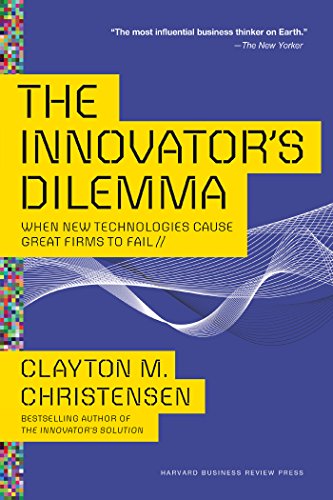
Image result for innovator's dilemma

May 02, 2015

Few weeks back when we went on a week long vacation, I packed "Jugaad Innovation - A Frugal and Flexible Approach to Innovation for the 21st Century" by N. Radjou, J. Prabhu & S. Ahuja as a possible lite read. When we were leaving for the airport from my SIL's home after a bit of repacking, I couldn't locate the book. Since I figured it didn't make sense to head out without any reading material, grabbed "The Innovator's Dilemma: When New Technologies Cause Great Firms to Fail" by Clayton Christensen from my SIL's home book shelf. By the time we boarded the plane, located the first book as well. This turned to be a blessing in disguise since both books were of the lite variety and were quite related to each other in their content. So, before the vacation was over, I could read the older Innovator's Dilemma (ID) first and then finish more than half of the Jugaad book that dove tailed into the first one nicely. Whenever I saw book reviews on The Economist magazine that often discussed two books together, I used to wonder how they found two different books that came out around the same time that are so closely related. Used to brush that thought aside thinking that topic must be the current fad inspiring multiple people to write books. Though these two books were published more than 10 years apart, serendipity had me reading them back to back in the same week. So, here I am talking about them together.

The ID book is more than 17 years old and is sort of a classic since the thoughts put forth in the book were new in the late 90's. By now the ideas are part of the common business wisdom. But are still plausible threats to existing large businesses. Main ideas presented can be summed up in these three bullets:
- Often when disruptive new ideas or technologies bring in new products to market, customers using older products won't know what to do with the new products (since they may not match their present needs nicely). But the other advantages such as cost, portability, ease of use may help other customers pick it up. Once the market grows, the cheaper, newer alternative can eat into the main market.
- Established companies who pay all the attention to existing customers taking care of all their needs with evolutionary products may miss this change in the market place and may end up on the side lines while new companies move in and start eating their lunch.
- Established companies should not try to manage this dilemma by trying to do both old and new products with one set of development & marketing teams since the messages/market may be contradicting each other. Instead, they should establish a subsidiary or a standalone group with its own development, marketing teams and P&L center. If the idea succeeds, it can eventually be mainlined.
 
About one fourth of the book talks about hard drive development by famous tech companies in the 60's to 90's and how despite having the right new product that is quite different from the current crop of products, those companies repeatedly failed to capture the market losing out to new comers. This is due to the fact that the new products are of no interest to their existing customers. For example, a much smaller and cheaper drive that is is slightly slower may not be of interest to the top end computer maker. So, the drive maker puts this product on the shelf and goes back to making incremental improvements to their existing form factor drives to suit the needs of the their customers, as they were taught to in the business school. But a new company starts selling the smaller, cheaper, slower drives to a totally new market such as game consoles. As their sales volume increases, they manage to make the drives faster and thus eat into the high end market due to lower price and smaller form factor. 

Author spends so many pages and charts to convey this idea. While all the charts and tables are important for his analysis, I am not sure it contributes a lot to the book's message. A good editor could have trimmed it down considerably. He then moves on to point out similar slips occurring in very different industries such as earth moving equipment manufacturers. Overall idea is certainly quite important for large enterprises. I was quite amused to see the last chapter where the author discusses how automobile manufacturers should handle the vexing problem of developing and marketing an electric car. Based on all the ideas discussed in the book, the author suggests developing a cheap car, and finding a market that can use a slow car that will drive only about 100 miles between recharging which may take hours. But in the last ten years, Tesla Motors has been doing very well by designing high performance electric cars that drive 300+ miles between charges and are extremely expensive! 

Cover artThat takes me to the Jugaad book. A friend of mine bought this book as a present to my son when we were in India one year back. It came out only in 2013 when the idea of Jugaad had been raising rapidly becoming a course in Harvard Business School, being talked about as Frugal Engineering by characters like Carlos Ghosn (Nissan CEO) and so forth. In Hindi, the term means improvising something cheap to take care of the local need. 

The three authors have provided a large number of examples and case studies illustrating how R&D conducted in economically poorer societies to develop products and services to meet the local needs have been making tremendous progress in bringing costs down despite being high quality products. These products are then sold back to affluent societies as well! This is very different from last century's model of taking an expensive product with bells & whistles developed for richer societies and then stripping it down to make a cheaper version for poor countries. Often such stripped down versions don't even work well in the targeted markets since the atmospheric conditions, usage models are all quite different compared to the original markets. 

In general most well known consumer products (cars, phones, food items, medicines, appliances) or even industrial products (heavy equipment, MRI machines) & services (banking, manufacturing) that we usually hear about  seems to be coming out of the US or Western Europe companies. So, one might be easily lead to think that other nations such as India don't seem to do much of innovation. This books dispels that myth pointing out to all the new products and services that are being developed and sold in countries like India, Brazil and China at often less than one tenth of the price making them affordable to not only local communities but also to poorer countries around the world first and then to US and Western Europe's affluent societies next. Examples range from an infant baby warmer (a simpler model developed by a woman pediatrician in India that costs <$100 vs. $3000 model sold by GE) to selling solar panels not as a product but more as a service in Brazil. Authors have tried to break down the Jugaad idea into 6 steps, such as 
- Seek opportunity in adversity: e.g. http://www.mitticool.in/ that is selling refrigerators that work without electricity.
- Do more with less: e.g. An Argentina farmer that invented the idea of asset light farming to overcome difficulties in owning land, equipment, labor needed for farming and is able to scale this model up now.
- Include the margins, meaning bring in the resource poor consumers who still need various products and services by making them extremely affordable, easily available using existing infrastructure.
- Think and act flexibly, meaning get early models out in the open and be ready to change the product/business model if the first idea fails. Doing this early/quickly limits losses.
- Keep it simple
- Follow your heart, since strict focus group study and ivory tower R&D may not be always right. Innovators living in the actual society/atmosphere where the product is going to be used may have a better understanding of the actual need.

Apparently Western companies such as Phillips, Ericsson, Pepsi, GE, Nissan, etc. are all learning these ideas and implementing them successfully. You can search YouTube with the term Jugaad and can see literally 100s of Jugaad examples. Most of those may look funny and sad at the same time making us realize how people around the world get by with so little so cheerfully. Still, the ideas can be extended to big and complicated projects as well. I remember reading how ISRO (Indian Space Research Organization) just dug a one foot deep trench with a 1KM radius around the launching pad that turned out to be a simple solution to route lot of cables easily while protecting them from the heat of the launching pad. When the Prime Minister of India quipped last year that the Mars probe they launched successfully cost less than what was spent to produce the movie Gravity, I was able to make that connection. :-)

Naturally, variations of this concept is in practice in various societies. (If you haven't heard of a Liter or Light, see this site: http://literoflight.org/#/) But this book particularly being centered on India, with all the numbers listed in Crores (i.e. Indian equivalent of 10 Million) and money in Indian Rupees (instead of US dollars), sounded quite different since I am so used to US being the center of the universe all the time! :-)

In the last chapter, they have managed to cover themselves saying Jugaad is not the next great thing after sliced bread that will eliminate hunger and bring world peace but is a complimentary model for R&D that should be part of an organization's overall MO. Authors have setup a website that is supposed to bring all the related material together and is promoted in the book quite a bit. But I found the site quite disappointing when I visited. I also found the innumerable subsection titles that appear once every two paragraph a bit annoying. Still, this book as well as the ID book, both are easy reads and should be worthy of your time if you choose to pick them up.
-sundar.

Saturday, December 22, 2018

Book Review: Being Mortal by Atul Gawande

Couple of recent business trips gave me some plane time to read this book. As the full title "Being Mortal - Medicine and What Matters in the End" clearly indicates, book material deals with how we should be treated when our time in this planet nears its end. Though depressing, certainly it is a book we all should read since the subject warrants a lot of social discussion and individual level understanding. Atul Gawande is a surgeon by profession who has made a name for himself in the last decade as a writer through his books such as The Checklist Manifesto, Complications, etc. Being a person of Indian descent, he starts off the book narrating at length how his grandfather (father's father) lived out his old age as a rich self-made landowner in India. There was a large extended family that supported him as age was catching up slowly disabling him. But since the family was well off and there were a large number of people available to take care of him, adjustments could be made to help him continue his life style. For example, going around all the agricultural land he owned each day was part of his routine. When he couldn't walk around the land briskly anymore, family got him a horse so that he can still go on his rounds. When his ability to even sit on the horse came into question, a servant followed him as he made his daily rounds and so on. 

Atul's father, who himself is a physician, had seen firsthand how his father lived out his last years. So, as a practicing physician in the US, he found how American society treated its own elderly totally objectionable. For a multitude of reasons, American families don't continue to function as large support network to ensure the quality of life for their family's elderly are retained come what may. It doesn’t feel practical in our current setup. Instead the elderly tend to live by themselves as long as they could. They don't feel comfortable living with their children as they feel that it is an unnecessary interference in their children's lives and a loss of independence for themselves. When they can't take care of themselves, assisted living and nursing homes start to show up in the picture. Most of these facilities are designed to make sure the elderly they care for are safe. Whether they enjoy their life is of secondary importance though given a choice most seniors will chose to prioritize their quality of life over safety. 

Since families are not closely involved in the day-to-day operations of the elderly, what kind of end of life care each one wants does not get discussed at the right time. Sons & daughters confront those questions all of a sudden when the elderly are not able to make those decisions themselves oneday. This also leads to the convention of "doing everything we can" to save the life of the elderly. But this is done  at the expense of their quality of life is not well understood, thus putting the elderly through a wringer making them suffer enormously though that is not what they would have wanted. This also has the downside of spiking the cost with no real return. 

While these problems may appear intractable and hard to solve, author points out specific towns in US that have adopted the practice of doctors talking to patients during their routine visits (like annual physicals) about DNR (Do Not Resuscitate), Living Will, what kind of care they'd like to receive when they are terminally ill. This practice has transformed those localities. Since the discussion is pervasive, it is not making people uncomfortable. As the discussions have taken place around kitchen tables and doctor offices earlier, even if there is no written documentation, relatives and physicians have a very good sense of what the patients want when they are not able to make the decisions for themselves. This provides a lot of hope for turning the system around despite all the 'death panel' scare tactics politicians and irresponsible media use for temporary gains. 

In the end it boils down to moving from "put a patient through hell temporarily for long term gains" approach used in medicine when patients are young, to "do all you can to help patient maintain quality of life and happiness" approach as they grow old. This transition has to be made routine even if it brings in some risks or can shorten their lives a little. Being comatose under a vegetative state for months may be technically prolonging one's life. But that is no way to "live".

Since the intended audience is general public, book is written like a series of stories with lot of detailed anecdotes (how the weather was, what she was eating, what clothes patient was wearing, how did he feel, etc.) that at times makes it feel like a lot of fluff. I couldn't help feeling that the content of the whole book could have been conveyed in a 15 page article. But I understand only when things are personalized this way in easy to read prose, the intended messages will get through, particularly when the audience is general public interested in light reading. 

On a related note, I have been pushing all my friends to write out their Last Will and Living Will for the past 5+ years. It doesn't matter how young you are or how uncomfortable it may make you feel to think about your own mortality, you owe it to your family to document your wishes. I hear excuses such as “My family/setup is so simple, it doesn’t require a Will” or “I don’t have a lot of property and so why do I need to write a Will?”. But trust me, if you pass away unexpectedly without a Will, you will put your family through a lot of trouble. I have offered to provide my Will as a template where you can just change name and few personal details and sign it in half an hour to hold a legally valid Will of your own. Some friends took me up on the offer but not as many as I had hoped. Since it is a closely tied topic to this book, would like to make that offer again. If you'd like to get a copy of the template I used, just send me an email. Next ten days might be a good time to complete such tasks as things slow down during the holiday season.

Happy holidays and a wonderful new year to you and yours!
-sundar.