Wednesday, August 29, 2018

Book Review: Misbehaving: The Making of Behavioral Economics by Richard Thaler

It is good to have friends who not only point you towards interesting books but actually mail order the book and get it delivered to you. This one landed in my doorstep thusly. :-) 

Book chronicles the birth and development of the field of behavioral economics via interesting stories, anecdotes, experiments and personal experiences. Richard Thaler, who is the author of the book was awarded a Nobel in Economics in 2017 for his contributions to the development of this field. It is amusing to hear the story from his perspective since he and few other economists noticed faults in the traditional economic models and proposed alternate models decades back just to prove their points. It has since evolved into this huge field now. Book's language and contents are very accessible as there is nothing too technical or complicated. 

As you may know, in the traditional school of economics, individuals are always seen as very rational entities that are not swayed even an iota by emotions, pressures, or social/environmental influences. The falsity of this notion is illustrated by a simple example. Let us say you go to a departmental store to buy a toaster that costs $20. If the store clerk says there is a sale starting tomorrow and so if you come back tomorrow and buy the same toaster, it will cost you only $10, most of us will skip the purchase that day, return the next day and pick it up for half the price thus saving $10. But if you are in the store to buy a $1000 TV, and the store clerk tells you that if you come back and buy the same TV tomorrow, it will cost you only $990, most people just shrug and buy the TV that day itself. This is because the human mind while working with a price tag of $20 finds a $10 discount a big one (50%!) that justifies going home empty handed and making the trip next day to buy it for $10 less. But while working with the $1000 price tag, same $10 discount doesn't look that important to make another trip to the store the next day. 

While this thought process may be easy to understand from a normal human behavior point of view, traditional economics uses models of human beings that will consistently make the second trip to save $10 or always ignore it and go for the purchase the same day, irrespective of the price of the item. Logically this is the correct behavior since whether a second trip to the store is worth $10 or not should not be influenced by other Supposedly Irrelevant Factors (SIFs) like the price of the item you are trying to buy. But we are all not Spock from Star Trek and so easily get influenced by SIFs. This is basically the bone of contention. Traditional economists refused to take this into considerations and kept pushing back with anyone of the following arguments:
- This observed odd behavior will all iron out when the stakes are really high.
- When all individual behaviors are added up to compute the big picture, it will even out.
- Even individuals will behave very rationally and consistently across all the activities if you look broadly on all their activities. So focusing on one behavior to find fault is not right and so on. 

People like Thaler and even Daniel Kahneman have proven this notion wrong time and again. Book is organized chronologically and so starts off with the 1970-80's related experiments in this domain. So, notions like endowment effect and mere ownership paradigm make their first appearances. Then he talks about the conceptualization of acquisition and transaction utilities. Acquisition utility is the value you derive from a purchase. Let us say you buy a bottle of cold water for $2. If you are really thirsty, you think it is worth the price. This is all the standard economic model considers. But in reality human beings also associate a transaction utility, because of which they feel great about buying that bottle of water for $2 if they got it from an expensive resort or restaurant since they expect to pay more for it. But if the same bottle (brand, temperature, quantity) of water was purchased from roadside, it feels like a rip-off since people expect to pay less than a dollar for it on the road side. While it is irrational, this is how the world works. In the following chapters we encounter sunk costs, mental accounting (where money that we rationally know is fungible is treated as not fungible), marshmallow experiments and quasi hyperbolic discounting. Each one of these terms are worth looking up as they are all good topics for party conversations. :-)

Second half of the book has several interesting real world case studies where these notions of behavioral economics are applied to improve business or people's behavior. For example, when credit cards were being introduced, gas stations wanted to charge customers using credit cards a surcharge to cover the fee they need to pay to credit card companies. Naturally CC companies hated this idea since it will make it look like their customers are being penalized for using the card and wanted the gas stations to include the fee as part of the standard gas price. After some consultation, gas stations (who did want the increase in sales CC will bring due to the ease of funds availability) decided to list the standard price with CC fee included and then give a "discount" for customers paying with cash. Mathematically & rationally there is absolutely no difference between surcharge and discount. But customers started viewing the discount as an advantage and were willing to go with "standard" price when they wanted to use the CC. Everyone was happy! There is a more elaborate example of how using such techniques Thaler helped turn a failing ski-resort business into a profitable one. There are also several negative examples like his interaction with NFL, GM and Uber that looked at his input but decided to discard them or didn't understand the importance to deploy the ideas to their own peril as per his recounting. He does list few academics by name, who fought against his ideas and lost as per his narration. I am sure those professors will remember the events differently. :-)

In the 90's the field had started getting traction with papers being published, conferences being organized and students starting to routinely working with him. In this phase there is also a large section that deals with finance and stock market that is quite interesting. There is an amusing complete chapter on how his colleagues who are all professors at the Booth School of Business in the University of Chicago went around picking offices in a new building they were moving into. Apparently it resulted in such a tense contest with emotions and competitiveness running quite high but in the end many missing important aspects of office selection (e.g. view) and focusing on aspects that turned out to be not so important (e.g. bigger office with ten more square foot space in the building plan that was hardly noticeable in the real office). Chapters on NFL player salary, TV game show analysis are all quite entertaining and help illustrate the span of domains where behavioral economics ideas will be applicable. 

Book wraps up with how these notions were applied to help improve employees save more in their retirement savings account (nudge them by making savings the default option instead of expecting employees to opt-in), and even working with Governments in other countries (U.K. for example) to promulgate these ideas to improve governance. 

Major complaints I had with the book fall into two categories. One is that in several chapters author is dropping too many names of colleagues, graduate students, professors he worked with to run experiments or write papers. It might be amusing or very nice for those individuals to see their names in the book. Thaler might be paying his dues to his collaborators in this manner as well. But when too many of these names appear in some sections, it feels like some irrelevant insider information that is too distracting. Second one is related to my own exposure to many of the studies, experiments and papers since they have been discussed in the mainstream media often over the years (e.g. how due to endowment effect, people will value a coffee mug they owned just for an hour more than what it is actually worth). So, while the prose is very light and easy to read, several sections didn't have a lot of new information for me. Still it was fun to go through the discussion again. Do give it read if you haven't already. 

-sundar.

Saturday, February 10, 2018

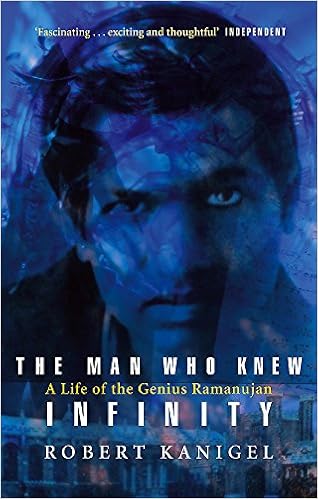
Book Review: The Man Who Knew Infinity by Robert Kanigel


In a very interesting coincidence I got both the English and Tamil versions of this book as gift from two different friends last December just days apart! The English version came in first from a friend that gives me books each time we meet. As you may know, this book has been made into a movie couple of years back. Since I had seen the movie (and so knew the main plot points), I had kept it in the "toRead" list a little further down the line. Few days later I met another friend who is the actual translator of the book into Tamil. Apparently it has been translated into multiple Indian languages as a "National Book Trust" project in India to commemorate Ramanujan's 130th year anniversary. The crispness of the Tamil translation's title (Ananthathai Arinthavan that precisely translates to The Man Who Knew Infinity in an elegant way) bowled me over. It’s been a while since I had read a serious book in Tamil. So, took it up immediately. Since I had both English and Tamil versions with me, went back and forth between the two versions almost chapter by chapter. It was a very interesting experience since I had never read a full book in two languages simultaneously ever before. :-) 

Image result for அனந்தத்தை அறிந்தவன்While Ramanujan's story is a really sad one, reading the book was a delight in several ways. I don't read a lot of biographies. But whenever I had read them in the past, they tended to be about Physicists/Mathematicians from Europe in the mid 20th century or books like Agony and the Ecstasy describing the life of Michelangelo and so on. At the time I read those books, I had not seen much of Europe and so had to imagine most of what was being described. But in this case, the small Tamilnadu towns where Ramanujan grew up, the kind of houses he lived in, names of the people who were part of his life, the schools and temples he frequented were all extremely familiar to me as I grew up in the same parts of India with similarly named relatives/friends in my childhood speaking the same language and eating the same food. This sense of familiarity added to the fun. If I had read the book only in English or only in Tamil, I wouldn't have had a chance to learn a slew of Tamil words for complex Math and Science terms (for example, Tamil term for String Theory is "Izhaiyooga Iyarppiyal”). Google translation is not showing the same term in Tamil. The rhyming poetic nature of such terms indicate that they were probably coined by the Tamil translator Prof. P. Vanchinathan, as he has a long track record of such cleverness. (He has developed a Python script that can verify whether a Tamil poem written to be of certain clause (called Venba) passes all the requirements!). He has nicely translated even the occasional English poems embedded in the English version of the book.

One disappointment I had with the book is that after reading it, I am not left with a lot more new information that I will carry forward. I did learn about the Wrangler, Senior Wrangler ranking in Cambridge, will remember the timeline of Ramanujan's story better, etc. But in the end I am left with the same details of what I had known before, Ramanujan's difficult days in India, his contact with G.H.Hardy, his miserable time in England while he published a lot with Hardy and his subsequent return to India followed by his demise. These broad strokes are what you are left with in the end. Compared to the movie, the book does get into lot more mathematical details to which I am grateful. Just to make sure I remember at least something brand new that I didn't know before, I went and read about Ramanujan’s Tau Function on the web.

Book talks a lot about how India hasn't changed much to be able to recognize such hidden gems that may be lurking around. While I do sympathize with this view, I am not very clear on what is a good solution that will prevent future Ramanujans being left undiscovered. He wasn't good at taking tests and acing them. So, he didn't finish college in India and as a result couldn't proceed through normal channels to get the recognition he deserved. While he had knocked the doors of dozens of potentials patrons to get support to continue his research, he eventually succeeded when Hardy read his letter and came forward to help him. It would have been very nice if the first person he contacted quickly recognized the immensity of his talent and work and gave him all the support he needed. But hind sight is 20/20. Today how can we separate real talent coming in through unorthodox means from fakes that claim superiority? Naturally we don't want to be fooled by charlatans or waste resources on those who may truly believe they are talented but in reality are not. Do you live in a country/society that has a means to recognize future Ramanujans who don't want to go through the regular academic channels? If so, let me know how the process works.

Book's author Robert Kanigel deserves a lot of credit/respect for the amount of research he has done, traveling through every part of rural/urban South India pertinent to Ramanujan's story (his description of the houses in small town India that I am familiar with stands out so vividly compared to Western homes that are architecturally/philosophically/functionally very different) as well as parts of England that Ramanujan spent time on, gathering a lot of details from first world war time archives and so on. Details in the book reflects his sincerity in trying to bring out a book that gives the readers a very close personal vivid record of Ramanujan's life, which was so very different from Hardy's. There are a lot of discussions about how scholars of Oxbridge lived in the early parts of 20th century. They were highly respected, well connected, all men, many of whom remained bachelors, wrote papers, attended conferences across Europe, had servant maids to cook & clean and so wouldn't have known how to make a simple meal. Contrast that life style with Ramanujan's who was displaced from his familiar surroundings, being a strict Tamil Brahmin couldn't eat non-vegetarian food and so had to cook for himself, was often depressed, wasn't comfortable with his fellow colleagues/neighbors but had an amazing ability to churn out paper after paper on higher order mathematics that stunned his English colleagues!

Even though I wish I could retain a lot more of Ramanujan's math, the book has lot more details compared to the movie. So, worth a read. BTW, while the movie was decent, I was puzzled by the way the actor portraying Ramanujan (actor Dev Patel) pronounced the name like an American rather than like a South Indian (who’d pronounce it as Raa-maa-nu-jan). Since the whole plot of the movie is describing how uncomfortable Ramanujan was in England not being able to give up his TamBram habits, the actor mispronouncing the protagonist’s name was awkward!

If you can read Tamil, please order the book from this National Book Trust link:
http://www.nbtindia.gov.in/books_detail__9__national-biography__2733__a-man-who-knew-infinity.nbt
Books of this kind are hard to come by particularly in languages like Tamil. So, we owe the team that brought it out our support via ordering a copy.

Monday, January 1, 2018

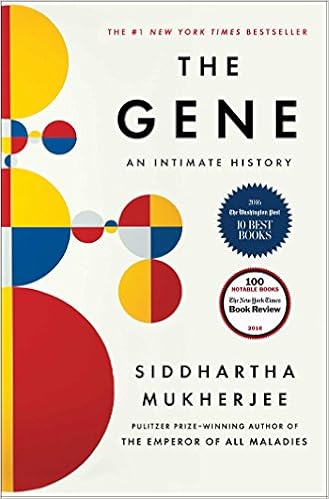
Book Review: The Gene - An Intimate History by Siddhartha Mukherjee


During grad school days we used to joke that the prestige of a journal paper you publish is inversely proportional to the length & complexity of the journal's name. You can be sure that I have never published anything in journals like "Nature" or "Science". :-) 

I have developed a similar, admittedly snobbish notion about books written by non-fiction writers. There are authors who publish a lot vs. those who write just a couple of books in their lifetime. While the so called prolific writers take a small idea and quickly churn out a 300 page drivel by adding a lot of fluff (that are no doubt easy to read), there are others who write comprehensive works in their field of expertise that makes you feel glad you picked them up to read. Siddhartha Mukherjee's new book titled The Gene - An Intimate History clearly falls into the second category.

After Emperor of All Maladies that chronicled the history and current status of cancer research, he understandably felt so exhausted and thought he will never pick up the pen to write another book ever since he had written out everything he knew, narrated all the stories he had and so felt he was done once and for all. But then eventually wrote this book to talk about the normal functioning of the human genes as opposed to the EoAM book that talked about abnormal functioning of genes that had gone haywire. 

Book spans roughly 2500 years starting from Greek philosophers. He weaves personal family history that has a liberal sprinkling of mental disorders nudging him to wonder about genetic causes with research conducted by stalwarts like Mendel & Darwin all the way to CRISPR/Cas-9 in the present day. Centuries past, Pythagoras cohorts believed that the sperm traverses through the male body collecting signals from all the different body parts as to how it should grow up and then uses those instructions to grow into an entity that looks similar to the father. During Mendel's time he had figured that there is some indivisible unit entity in biological beings that is able to transmit flower color or height in pea plants from parent plant to child plant in a binary mode (i.e. characteristic quality gets either transmitted or not transmitted but doesn't get diluted half way when different parents are crossed) and can even remain hidden for multiple generations before revealing itself in a descendant further down the line. Then subsequently the DNA double helix structure, how the genes are made of just 4 alphabets (GACT), stretches of parts of the DNA forms a gene, how genes encode a recipe for making proteins that in turn creates cells that contains copies of DNA were all understood step-by-slow-and-painful-little-step. The amount of thoughts, efforts, extremely painful research and notes keeping that has brought our understanding of human genome to where it is today is simply humbling. 

Author has a knack for visual metaphors found allover the book. Many are quite useful to visualize the enormity of tasks on hand. He states that the human DNA when laid out in a straight line can stretch from US to Europe in which clusters of genes may be found like small islands found as pin pricks in the ocean! Collecting all the pin prick land masses may form something like Tokyo's metro train line equivalent. This mental picture helps you easily understand the sparseness with which genes are distributed in the DNA structure. Mapping the genome is described as climbing a rope to scale a mountain by moving your hands up the rope one palm at a time without leaving any gap. Another approach called "shot gun" used to decode human genome is described as breaking down the sequence into thousands of little pieces (as if blown by a shot gun), reading them and then trying to sequence them by noticing the overlapping letters found in adjacent segments. He also paints nice visuals as in the case of describing cell biologist Thomas Morgan's lab where he was studying fruit flies saying, "Bunches of overripe bananas hung from sticks. The smell of fermented fruit was overpowering, and a haze of escaped flies lifted off the tables like a buzzing veil every time Morgan moved". Even in my little writing attempts I have tried to paint such visuals as it tends to brings a sense of immediacy to the story. But in my case, I was describing some time/place I personally knew & had experienced. But since Morgan's lab was functioning during the first decade of the twentieth century, we can be sure that the author is not describing what he saw. :-) But with a smile, we can move on since it certainly helps the reader visualize the image well. 

I tend to wince when I read articles or books that tend to describe how one particular event or discovery transformed the entire human history. Good but simple example will be a write up of how if that apple hadn't landed on Newton's head, we wouldn't have discovered the notion of gravity and so won't have planes/GPS, etc. While such stories may sound amazing/nail biting, I tend to think sooner or later some other fruit or thing would have landed on Newton's or someone else's head and we would have understood gravity. So, I liked how the author, despite describing several monumental discoveries related to cell biology, genes and DNA, chronicles them as impressive discoveries but treats them as one in a series of steps that lead us to the present state (which still has lot more things left to discover). 

There are so many details in this domain of genetic research that are fascinating. Just to give one example, Cystic Fibrosis is a disease caused by genetic mutation and is very prevalent in European gene pool. If so, you'd wonder why evolution didn't cull it out by survival of the fittest selection process. It turns out that the mutation prevents salt and water loss in the host and so can prove to be an advantage when there are cholera epidemic that can kill people through dehydration! So, single mutation could be advantageous. But if a man and a women both with single mutation have a child, it can inherit double mutation that results in CF! 

Similarly, I had wondered as to how an entire organism like a human being is formed from a single fertilized cell. We know about cell division and the DNA in the cell serves as the recipe to make the human being. But as the cells divide, how does the process knows not to grow a thumb where your head is? If you don't have the patience to read this 600 page book, you can read this old but small article that lays out the details to a good extent. Research done on C. elegans (a small worm) to understand this phenomenon discussed in the book is fascinating. Author covers Nazi Germany and segregated US's eugenics efforts, development of companies like Genentech, inventions created to use viruses to carry bits of DNA that need to be implanted into bacteria and then animal/human cells, all the Nobel prizes harvested over the decades, latest ethical concerns in labs in China rushing to modify human genome that may propagate endlessly into future civilizations and concluding with the need for a deliberate well thought out mandate to guide this field into an appropriate future that we could be proud of. 

One thing I didn't like is the lack of drawings/pictures/images. I think the work is extremely well suited to carry a lot of illustrations. But the author states that he prefers to paint word pictures so that readers can generate their own vivid mental images. I couldn't agree with this view. I certainly would have appreciated lot more drawings close to the text describing them. (Even few photographs included are bundled into a contiguous section of few pages in the middle of the book.)

I am sure before my time is over, I am going to see at least two major revolutions that will reshape human lives phenomenally. One is going to be in the IT (Information Technology) area with the advent of ubiquitous high speed wireless networks (think 5G and beyond) combined with machine learning/AI. The other is going to be in genetic engineering. While the front seat view should be fascinating, hopefully the journey and destinations will be as safe in biotechnology as self-driving cars promise them to be!! :-)

Happy New Year!
-sundar.

Thursday, December 28, 2017

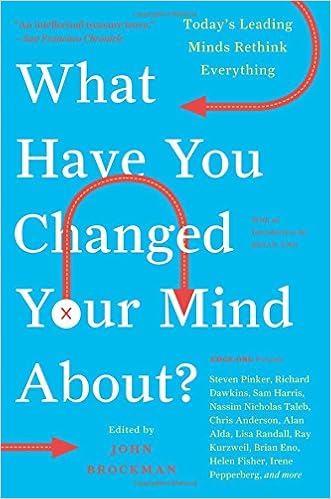
Book Review: What have you changed your mind about? Edited by John Brockman


I push myself to write about the books I read for two reasons:

1. Being a very slow reader, I obsessively read, reread each sentence, understand and move to the next one all the while losing a lot of time. By the time I get to the end of the book, I may not remember very many things I read in the initial chapters of the book! So, writing a page or two about the whole book forces me to think through the contents of the entire book which in turn helps deposit the overall takeaways somewhere in my head. Without this process, I may not remember much of what I read after a week or two. Perhaps sad, but true! :-(

2. While most of my friends hit delete when they see my emails claiming TLDR :-), each book/topic tickles some subset of my friends, who then provide interesting additional pointers/follow ups. If I don't send out an email, I am sure I will never get those pointers. In a way sad, but that is the reality. :-)

This book called "What have you changed your mind about?" I just finished reading refuses to fold into any simple, easy takeaway making it interesting w.r.t. both of the points above. There is no simple summary for me to store & remember as it is a collection of short essays by several dozen experts in several different fields. Since it touches many different fields, this write up may not pique the curiosity of any one particular set of friends interested in a given field, obliterating the probability of receiving additional pointers. Hopefully I am wrong w.r.t. the second point and will get feedback related to such efforts online or in other books. :-)

You may know about Edge.org site that has been around since the mid-90's. In case, you didn't, you can read about it here. They had asked scientists, philosophers, academics, business people to write about ideas, opinions, concepts, notions they held earlier that they had changed later when new data or evidence proved them wrong. In this day and age, particularly in the arena of politics where being stubborn is considered a virtue and changing your mind on any issue gets you the sobriquet "flip-flopper", it is refreshing to read several respected experts writing about how they were wrong and were happy to change their long held views in their own field of expertise. Naturally you don't want to be fickle minded devoid of clear ideas in your field of interest, gullible enough to be swayed easily. But when new evidence/data that contradicts your ideas come to light, being able to switch your position is a mandatory requirement for scientists. It is certainly a characteristic that should be applauded and nurtured among the younger generation so that they don't feel ashamed to change views when warranted. So, I loved the premise of the book right away.

By design since each essay (not calling them chapters since each piece is just couple of pages long and there are more than 100 of them in a 400 page book) is written by a different person, it was a little difficult to read the book without settling into any one writing style and theme. Since there is no connection from one essay to the next, I did jump around initially to read the pieces written by people I knew. But later reverted to reading it from end-to-end so as not to miss any piece. While there were a few badly written pieces that didn't make much sense, there were a lot of good ones. Here are a few samples:

Freeman Dyson writes that based on the book Japan's Decision to Surrender by Robert Butow published in 1954, he believed that the two atomic bombs dropped on Japan brought world war II to the end. But based on new information summarized in a 2007 article, he has changed his mind since it is clear now that the surrender decision by the Japanese emperor didn't concern itself with the bombing but was based on other historical factors related to Soviet invasion of Manchuria! The Japanese military elite interviewed by Butow went with the "bomb brought an end to the war" narration since that saved face for them as the bomb is a result of a major scientific innovation where as the true reasons were related to lack of spiritual power and strategic errors.

Ray Kurzweil says that he has changed his mind about possible existence of other intelligent life forms in the universe and so rejects the SETI (Search for Extra Terrestrial Intelligence) attempts to find them.

Richard Dawkins discusses as to how The Handicap Principle proposed by zoologist Amotz Zahavi didn't make any sense to him for years and he was arguing against it. The principle basically says animals often carry serious handicaps as a way to display their superiority to the opposite sex. A good example is the plumage carried by peacock. It is unnecessary weight, and is inconvenient to carry around. So, peacocks without the plumage should have had an evolutionary advantage irrespective of the fact that the plumage may look pretty. But as per Zahavi, the underlying message is that the peacock is so strong and healthy that it can afford to carry the handicap and so should be preferred by the peahen in search of a mate. Verbal arguments discussing this notion can take you only so far. So, Dawkins looked for mathematical models that demonstrated Zahavi's idea is correct. Initial models & studies pushed the probability of Zahavi being right downwards. But eventually a scientist named Alan Grafen found an evolutionarily stable combination of male advertising and female credulity strategies that is indeed Zahavian. Having seen this proof, Dawkins had changed his mind.

While there are 130+ such changes that runs the gamut, what I found interesting was how years of analysis and additional evidence have moved researchers arguably in opposite directions as well! Just to give one example, Jesse Bering changed his mind to arrive at the notion that despite all the new understanding God still casts a long shadow on human beings for good reasons, while Clay Shirky has switched his belief coming to the conclusion that the Doctrine of Joint Belief (i.e. that science and religion can co-exist) is all nonsense and should be completely thrown out. :-)

Could be an interesting book to keep and pop open a random page to read a random article whenever you feel like it.

Please do me a favor. Send me a note or a short write up about how you have changed your mind about something over the years. It could be pertinent to anything in the world/our lives, not necessarily related to science & technology.

When you do, I will send you one notion that I used to hold that I no longer do due to contrary evidence.
-sundar.

Sunday, May 21, 2017

A Better Replacement for Affordable Care Act (ACA)

Note: My wife Raji Srinivasan and I submitted this article to Medscape.com for a competition. It was selected as one of the top five winners out of 600+ submissions. A slightly edited version can be found at the Medscape site using this link. Our thanks to Medscape for encouraging such discussions.


Everyone agrees that US medical expenses are exorbitantly high for the quality of care we get. But getting consensus on how to fix it seems quite elusive. Since current alterations being considered were only tweaking a few things here and there due to political reality, the resulting system won't solve all the underlying issues. To resolve the source of the underlying problems, we need to implement a solution that resemble other businesses that are extremely successful in driving costs down consistently while making their products & services available to everyone as years go by.

To arrive at the solution we propose, we start with these assumptions/understanding:

  • If we totally get rid of insurance systems, market forces will help contain the rising cost of healthcare. Basically this is what happens in societies/countries that do not have any health insurance policies and people pay for products & services from their own pockets when necessary. But in respectable/civilized societies, letting people die since they can't afford healthcare is inhumane. So, some form of healthcare support that is efficient is needed.
  • A single payer system run by the Govt (as in UK or Canada) might be good from control perspective (no patchwork care, no incompatible systems, health history consistently available to care providers through a single database/access point, being able to control cost, etc.). But the amount of fraud that goes on with the US Medicare & Medicaid systems run by US Federal Govt is mind boggling. There are also large inefficiencies in the delivery. If we fail to address these concerns, the resulting system will not deliver care efficiently.

Keeping these points in mind, we propose the following framework:

  1. Two percent of all income gets deducted and put in a personal account (similar to Health Savings Account currently in use in US). Since US median income is about $55,000 this will mean roughly $1100 per earning member.
  2. No specific insurance company negotiated rates for any medical procedure/medicine/consultancy will be allowed. All providers must list the price for their products and services openly. Care providers will be allowed to revise these prices once a quarter.
  3. When you need medical care/products/services, you can get it from whomever/wherever you like anywhere in the country. Expenses will be paid from the 2% account mentioned above until it is fully drained. At the end of the year, if it still has funds left, it is given back to the individuals. This will make sure people use coverage carefully and the providers who provide good quality services at low cost thrive.
  4. Once that account is drained, the healthcare system will kick-in and pay for all additional coverage at 98% rate. The remaining 2% will still be paid by the individual user of the service. This will ensure that all needed coverage is available without bankrupting individuals while the 2% cost share by users will ensure that there is still a small cost (like co-pay) to restrict and discourage abuse.
  5. Since one huge federal program administering healthcare for such a big nation will lead to fraud and abuse, we can do one of two things. Either setup a separate non-profit entity (like US post office) that handles healthcare. Or let the states manage it at the state level with block grants based on the size of the population so that smaller offices/budgets/geographical proximity can limit fraud/abuse. But the care/products/services are standardized nationwide so that states don't get to limit/deny coverage. Patients will still be allowed to get the care they need from anywhere in the country.
  6. Allow anyone to buy pharmaceutical drugs from anywhere in the world. This may look like a dangerous proposition at first. Consumers may start to think that just like exploding batteries in devices imported from around the world, poor quality drugs may flood the market and obliterate the quality currently ensured in the US drug development & distribution system that is highly regulated. But this is a big myth. Even within US, there are poor quality compounding facilities that mix and pedal very poor quality medicine putting people's lives in danger. On the flip side, excellent quality drugs (same as the ones sold in US) are being sold by Canadian pharmacies for a fraction of the cost US users pay since the prices are regulated there. The simple act of opening up the market will make sure the prices remain real and not inflated due to regulation and middlemen. So, automatically drug prices in US will come down to the least possible value where the drug maker can still remain profitable. This is exactly how the tech industry makes extremely high quality products available at deflating rates as years go by. If products are faulty or of poor quality, the entities selling them will be punished severely by the market and can additionally be punished by regulatory agencies & courts.
  7. Eliminate Medicare, Medicaid, and other individual Government run healthcare systems to save cost and improve efficiency, as this one model can serve everyone in the country.
  8. Some of the details could be tweaked. For example, instead of 2%, it could be 1 or 3%; we can deposit a set dollar value into the accounts of those who may not be earning anything. But establishing these principles in a very simple, easy to understand system should be adequate to get things under control.

Though much more details could be added to this proposal, listed points highlight all the salient aspects of this plan. Despite what the healthcare industry may say, if true market forces are brought in, cost will come down irrespective of how high-tech provided care is or how different healthcare is compared to other products & services. For example, Lasik surgery is a high-tech procedure performed on such a precious organ as the human eye. But since it is not routinely covered by health insurance, the fee for that service is extremely competitive. It used to cost something like $10,000 when it was introduced about 20 years back. But it costs as low as $1000 now for a version that is much more improved! Same model goes for orthodontic procedures. Though it is not as high-tech as Lasik, price is competitive and continues to decline with improving quality. We can see advertisements for low, low prices in bill boards. We never see such competition, declaration of price for any procedure covered by insurance! 


Forcing the price for any product or service to become competitive and openly visible while providing the needed incentives for the users to choose the best possible option at the best possible price is the only principle needed to deliver excellent quality products & services at the right price in any field, including healthcare.

Tuesday, February 28, 2017

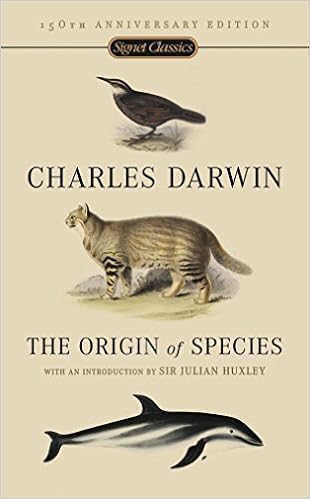
Book Review: On The Origin of Species by Charles Darwin

You might react to the title of this post with "Who the heck are you to review Origin of Species and aren't you a bit late to the party?!?" 

I should say that response is quite valid and this is more of an attempt to pay my homage rather than "review" the book. :-) 

More than 25 years back, during my grad school days, a friend of mine and I were walking by a strip mall where I saw an ice cream store. Just for fun I challenged my friend to say something amusing about ice cream. He promptly said, "I scream, you scream, we all scream for ice cream"! I thought it was brilliant and didn't realize for the next year or two that it was a popular slogan from an ice cream commercial on TV! Same thing happened with another friend who during a discussion on ethics and religion said, "For all we know, God could be a set of equations". Again I thought it was brilliant until I realized years later that he was restating a quote! Neither one of the friends actually tried to deceive me as they never took credit for those lines and probably presumed I knew that they were not being original. But I realized that they were quotes only years later.

Reading OoS put me through that ride multiple times. Several ideas I had read earlier in books by Richard Dawkins and other Biologists are all discussed in this one, while all along I was presuming that they were original ideas by those authors. Again they never claimed that they were but some how I don't explicitly remember reading that they are just elaborating/explaining Darwin's ideas further. Though it could be just my faulty memory, I can recall many examples. Will stop with just three:

1. The "Intelligent Design" (supposedly a more palatable euphemism for Creationism) crowd used to point to complex biological organs like eyes that have so many intricate components that need to come together for such organs to perform well as evidence that there must have been an Intelligent Creator who designed them as one complex piece at a time as they could not have evolved. Dawkins wrote a book called The Blind Watchmaker to present counter arguments. But Darwin has discussed this notion clearly explaining how a very primitive light sensing ability would have given a marine being a slight advantage over the others that didn't have any light sensing ability and how that sensitivity could have evolved into current level of sophistication we encounter in the human eye over the millions of years. Dawkins had only restated and elaborated Darwin's ideas. 

2. Ring species which describes slowly transforming/evolving populations that eventually diverge so much that the populations at the two ends of the ring can't interbreed. 

3. There are books like "Independent Birth of Organisms. A New Theory that Distinct Organisms Arose Independently from the Primordial Pond, Showing that Evolutionary Theories are Fundamentally Incorrect" with its author claiming he has come up with a fantastically original theory that proves Darwin wrong, while not supporting creationism. Upon closer inspection, I realized that the author says instead of just one life form created in the primordial pond that lead to all the variations in the living beings found in the universe, a small number of slightly different life forms could have arose originally that will allow for any incompatibility you find between organisms. Even 15 years back I was underwhelmed when I understood this detail since I thought it differed from Darwin's only marginally. This variation having been derived from computer models/simulations and DNA data sounded almost the same. But Darwin discusses even this same idea in this book even though DNA and genes were unknown in his days! He clearly says that there could have been more than one life form that came into existence as progenitors for all the life forms we see today but as long as we support small changes leading to variations in life forms that routinely get pruned out by the survival of the fittest notion, it doesn't matter whether the first life form was just one or a handful. . 

For a book that is more than 150 years old, it is not written in Greek or Shakespearean English and so is accessible. There are few notations like &c. (that means etc.) and terms that today's readers won't be familiar with. 

Interestingly, individual words Darwin uses to write his book are mostly at the high school level and so it looks like an easy read. But he continues to string them together in really long sentences, in stream of consciousness style writing that requires the reader to pay close attention to the thought process as it evolves. Here is a typical sentence: 

It is, no doubt, extremely difficult even to conjecture by what gradations many structures have been perfected, more especially amongst broken and failing groups of organic beings; but we see so many strange gradations in nature, as is proclaimed by the canon, `Natura non facit saltum,' that we ought to be extremely cautious in saying that any organ or instinct, or any whole being, could not have arrived at its present state by many graduated steps. 

You get the picture. :-)
Newer rewrites of the book using more contemporary writing style are available for purchase. I haven't read them. 

In general when we read a book, developments that have taken place after the book was published may not be that significant to what the book is trying to say. But since this book is 150 years old, I had to remind myself that Darwin didn't have any knowledge about the DNA, genomic structures and its contributions to shaping a life form, that is so relevant to this domain. He does wonder about how when an embryo starts to grow, somehow different parts of the growing embryo knows which part of the body it has to eventually become! These details are explained very well now by digital switches turning on and off on the genomic structure that he didn't know about. 

He talks a lot about the quality of fossilized records saying what we have should not be perceived as a perfectly well stocked museum but should be understood as a highly incomplete, record archive of questionable quality. He is correctly convinced that many of the questions he couldn't answer in his days related to how lifeforms morphed could have been answered well if only we have had a full collection of well preserved fossil records. 

Way back in the 1980's when I heard US President Reagan giving a speech to religious conservatives saying, "Theory of Evolution is just a theory", I was quite puzzled. As a teenager. I understood Biblical stories and the idea of creation were similar to Greek or Hindu mythologies. In school we have heard of those stories, took them as allegories and had no qualms moving on to the science class in the next hour to learn about the theory of evolution along the lines of learning physics or chemistry. We never thought what was taught in moral/religious classes need to be reconciled verbatim with what was taught in science class! Most of my friends receiving this email might be of similar persuasion irrespective of which continent they grew up in or living currently. But if you do have a different thought, please send them to me.

The volume of research Darwin has done to gather his data is stupendous. He has done studies like scrapping the dried mud off of the feat of migratory birds and then testing the seeds found buried in the mud for their capacity to germinate to assess the viability of seed dispersion across continents! During his famous voyage on board HMS Beagle from 1831 to 1835, he has gathered so many specimens, recorded tons of observations/notes. Many experiments of his were so slow and painstaking, that we can't help but stand up and salute! Only when we read the book end to end, we can appreciate the amount of thought he has put into it. He has analyzed in depth how certain features could have become atrophied due to disuse depending upon which part of the animal's life it would have been useful (i.e. when it was a baby or adult). Thus for example some teeth in calves that are present inside the gums but never come out to serve any purpose can be explained because when it was a baby it would have been of no use but in a progenitor animal in a different habitat, it could have been useful when it is an adult. Since the calf in the current habitat doesn't need it, the embryonic stage hasn't got the message to get rid of it fully yet. So, it is there inside the gum but doesn't grow out as it is not needed in its current species form and habitat! Similarly he presents arguments about continental shifts that could have moved a species from one part of the world to another though now it looks extraordinary. His ability to process so much of information spanning time, species and space to build his arguments is extremely humbling. 

Since the book is a fairly large one of about 600 pages, he not only takes the time to build his case but has delved into a lot of arguments he had come across in his days against the theory of evolution. Through slow and detailed arguments, he explains why he is convinced that his theory will stand the test of time and the naysayers will fall by the wayside, while simultaneously conceding that he is not able answer all the questions fully because evidence he needs in terms of fossil records or other scientific results are not yet available. 

His friend & colleague T.H.Huxley commented after the book was published as to how extremely stupid of us all not to have thought of this explanation. While it is a beautiful compliment to Darwin, I don't think ordinary human beings could have understood and explained this secret of nature looking at a tiny snapshot of time/space/species, until we evolve to be more intelligent beings in another million years. :-)

In case you haven't seen this documentary related to this topic, it will be worth your while:
https://www.youtube.com/watch?v=7HZzGXnYL5I

-sundar.

Saturday, June 25, 2016

Nuclear Fusion

The Solvanam Tamil web magazine site brought out a special issue on Science & Technology recently. I contributed an article on Nuclear Fusion for the issue. The title அணு விவாகம் in Tamil means Atomic Wedding. I used the thread of marriage and break-up throughout the article to discuss pros and cons of fusion and fission respectively. What you see below is the translated English version. I am not sure the metaphors work in English as well as they do in Tamil. But the piece below still conveys the main ideas.


Whether we look at Nuclear Power Plants like the one in Kalpakkam (India) that has been running smoothly generating power for decades or the likes of Chernobyl or Fukushima that ended up causing historically significant  disasters, they are all dependent on Nuclear Fission technology that splits the atom to generate power. Similar to a divorce or the breakup of a family, splitting up an existing atom usually results in a lot of undesirable consequences, that need to be handled correctly. Over the last two years, thanks to the Koodankulam nuclear power plant related protests in India, the bad effects of running nuclear power plants have been discussed extensively on the media presenting both facts and fiction.

But instead of breaking an atom, we can also merge two atoms and generate power out of that process. This technique called Nuclear Fusion can in theory be used to generate electricity as well.


Similar to a good marriage that brings two people together to form a well functioning new family, when two atoms are fused, the resulting side effects are predominantly good ones. Experts working in this area know/understand this fact very well. But since conducting this wedding is not easy, no one talks about it much. Countries like India, USA, Russia, France and others have joined forces and run projects/tests to move this technology forward. There are also research efforts ongoing at the individual nation level to get nuclear fusion to work and behave. Until the late 90’s this field was mostly relegated to academic research hoping for long term returns. There wasn’t much hope to get this working in a practical way to get usable energy out. But due to recent developments in the last decade or two, several small private companies have entered the fray promising to get this technology working soon and thus generating a good bit of money for the investors.

There are many differences between physical/chemical reaction involved in splitting an atom Vs. fusing the nuclei of two atoms. In nuclear fission, heavy elements such as Uranium (235U) are enriched first and then bombarded with the subatomic particle called neutron. The Uranium atom that gets hit this way, breaks up angrily into two smaller atoms called Krypton and Barium. In the process, it will also spit out three more neutrons and a bunch of energy. When those three freed neutrons attack three other Uranium atoms that are nearby, a chain reaction ensues. This will continue until all the available Uranium is depleted. Since each Uranium atom that gets split also emits a lot of energy, if we leave this chain reaction to continue unabated, it becomes a nuclear explosion. This is effectively the idea behind the atom bomb that can destroy a city in seconds. Instead of letting all the freed neutrons attack the available Uranium atoms, if we capture most of them and remove them from the nuclear reactor where this chain reaction is taking place, letting only a very small number of neutrons to remain in play, it reaches “critical” stage, which just means the chain reaction is stable and sustained while not growing anymore. Now the energy coming out of this sustained reaction can be harvested to heat up water, produce steam, that can then turn the turbine in the generator to generate electricity.  

nuclear_fission.jpg
This type of nuclear fission reaction does not take place in the universe naturally. Human beings have to artificially ignite such a chain reaction by breaking up an existing heavy element atom. In order to start the reaction, we also need to mine elements like Uranium hiding deep beneath the earth. When the fission reaction takes place, it also ends up leaving a lot of radioactive residue that will remain radioactive for thousands of years requiring us to manage that toxic (carcinogenic) leftover from the nuclear power plants.

Nuclear Fusion differs from fission in all these characteristics. In fusion, two usually very small atoms are forced to bang into each other under extremely high temperature and pressure condition. When they bang into each other, the nucleus of the two atoms fuse to form a slightly bigger new atom. If we compare the atomic mass of the new bigger atom with the combined atomic mass of the two atoms that combined together, the newer bigger atom will be slightly lighter. The difference in mass, paying tribute to Einstein’s E=MC2 equation, gets converted into a burst of energy spitting out a lot of heat and pressure. That intense temperature and pressure pushes the next couple of atoms nearby to bang into each other continuing the chain reaction.


Unlike nuclear fission, fusion naturally occurs continuously all over the universe. It is this wedding that provides the main source of heat & light in all the stars including our own sun. The light element atoms that usually take part in nuclear fusion are the isotopes of Hydrogen called Deuterium and Tritium. These are not rare to find elements like Uranium that hide inside the earth and had to be dug up through difficult and expensive mining operations before it can be used in fission reactors. Even when the fusion reaction takes place, there is no radioactive material created that had to be safe-guarded for centuries so as not to cause any harm to human beings. There are very few neutrons that emit from fusion compared to fission. As long as we ensure they don’t go around hitting other elements inadvertently, the only byproduct from D-T Fusion reaction is harmless Helium gas that can be safely used to fill up balloons to be given to children. To top it off, the amount of energy generated from fusion is usually four to five times greater than fission!

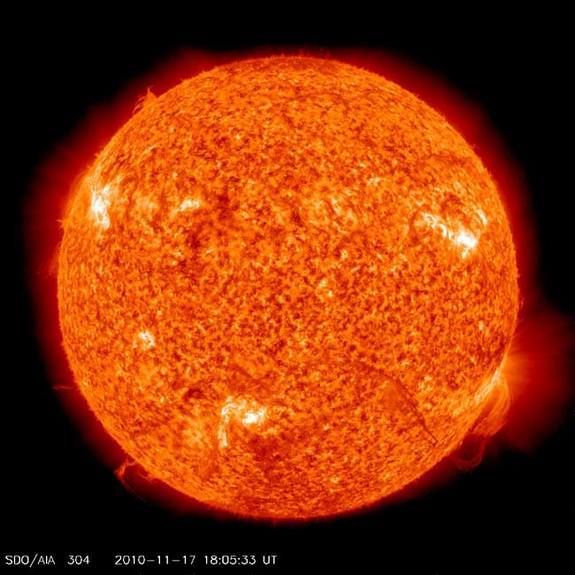
If everything is hunky-dory with fusion, then why are we still using nuclear fission instead of fusion to take care of our energy needs? Answer to that question is the extreme levels of temperature and pressure needed to trigger this fusion wedding. In stars like our Sun, their weight being extremely high, their own gravity provides a means to create the needed pressure. When the nuclear fusion occurs, the heat generated provides the extremely high temperature needed to sustain the reaction. So, there is no dearth of either temperature or pressure to keep the reaction going in the stars.
sun-photo-solar-filament-101118-02.jpg

If we want to get nuclear fusion going on the surface of earth, we need to create similar temperature/pressure working conditions that exists in the stars!  If you wonder if such a thing is even possible, it has already been done in the middle of last century itself. If you had heard of thermonuclear explosion or hydrogen bomb, that is what it was. In those bombs, a regular nuclear fission reaction is initially triggered and then the temperature & pressure generated from that nuclear explosion is in turn used to create a nuclear fusion of hydrogen atoms releasing an order of magnitude more energy. So, we are capable of creating the conditions if it is for exploding a fusion bomb. But under more peaceful conditions when we are trying to use this reaction to generate electricity, exploding a nuclear bomb to trigger fusion is not a good idea. Even after we create the right conditions to trigger fusion, sustaining the chain reaction at the right level ensuring that it neither turns off nor becomes uncontrollable is a big puzzle that has not been fully solved.

To understand how much heat is needed to trigger nuclear fusion we can examine what goes on in the Sun’s environment. The surface temperature in the Sun itself is around 50000 C. If we drill down to the center of the Sun temperature rises to 27 million degrees Fahrenheit (or 15 million deg Celsius)! Sun is also 330,000 times heavier that results in a lot more gravity to create the needed pressure. What goes on in the Sun is an uncontrolled explosion, with a massive amount of hydrogen fuel in play. Since we will be starting the reaction from scratch with limited fuel supply, initially we need close to 100 million degree centigrade temperature to start the reaction.

When Hydrogen atoms are placed in that high a temperature and pressure, they stop being in solid, liquid or gaseous states and switch to a fourth state called plasma. In that state it will vaporize anything that it comes in contact with! So, how do you handle this material safely is another big question perplexing fusion enthusiasts. Since we know plasma reacts to magnetism, current plans envision using massive electromagnetic forces from the instant plasma is formed to handle it safely while simultaneously using it to increase the pressure as well.

In summary, we need to be able to manage two big issues to be able to put nuclear fusion to good use.
  1. First issue is the creation of the needed extremely high pressure and temperature to get fusion going, while delivering Hydrogen atoms as fuel to that location.
  2. Second issue is maintaining the chain reaction well once it is initiated and harvesting the generated energy for use in power generation.  

To find out ways to create here on earth, albeit on a miniscule area, more heat & pressure than what prevails on the surface of the sun, there is a consortium of 35 countries including India and US working together. This consortium is setting up a monster called International Thermonuclear Experimental Reactor (ITER) in the south of France at a cost of twenty billion dollars with a twenty year building plan. For comparison, the other well-known international physics project called the  Large Hadron Collider has a budget that is less than 25% of this one! Do visit this project’s website located here.  

ITER researchers are using the traditional Tokamak based approach to managing fusion. Tokamak is a 1950’s Russian invention that has a huge metal doughnut shaped ring construction that is hollow  inside. By wrapping it up with a lot of coiled wires outside and passing electricity through those wires, we can generate very strong electromagnetic fields inside the ring. Plan is to manipulate this electromagnetic field to control the plasma flowing inside and make it dance to our tune.


This is a monstrous international science experiment and so characteristically, it has blown past all the previously set deadlines and budgets and is crawling along slowly. When the construction is completed around 2027, this is expected to be the world’s largest fusion reactor. Even though it is swallowing massive amounts of time and money, when it finally works, there are no plans to generate electricity to light up nearby homes. There is not even a generator attached to this reactor. Idea is only to master nuclear fusion and generate knowledge for the field.

In parallel, the Lawrence Livermore National Laboratory in US near San Francisco is attempting another approach. The National Ignition Facility being built there is using a setup shown in the next picture. It will take up the space of three football fields and be as tall as a ten story building. Inside the facility researchers are using extremely high powered laser beams that can consume power that is thousand times more than what the entire US consumes at any given instant. These laser beams are blasted onto Hydrogen atoms in very short (couple of nanoseconds) bursts. This approach is termed Inertial Confinement Fusion.


People making fun of this field say, “Nuclear fusion enthusiasts have been claiming that in the next two decades they will master this technology and start producing endless amount of electricity. They have been very consistent over the past five decades and we expect them to be consistent and continue saying the same thing even after another fifty years!”.

But unlike the last century, more people with money and knowledge have started believing that this is possible. So several small private firms have jumped into the fray to make this a reality. We can list multiple companies like General Fusion of Canada, Helion Energy in Washington state, Tri-Alpha Energy that has been in stealth mode hiding in California with good funding and so forth. Few billionaires in US who made their fortunes in the tech industry like Amazon’s Jeff Bezos, Microsoft’s Paul Allen, PayPal co-founder Peter Thiel have pumped in a lot of funding into these companies. Even the defense manufacturer Lockheed Martin (that produces F-16 fighters, and the forthcoming F-35, etc.) has jumped in with a tall promise that they will deliver a nuclear fusion based generator that will fit in the back of a truck in five years! They said it last year and so four more years to go!

Experts that work in these private firms openly say that unlike researchers in national labs and academia, they are not going to be wasting time discussing their findings in conferences and publishing papers endlessly but will focus on getting things to work quickly, won’t analyze why when things start to work, focus on delivering the fruits of their labor to the society at large with the goal to monetize their work similar to the tech industry.


The technical approaches taken by these private teams differ from academic/government teams on multiple fronts. For example, none of the private firms think that building monstrous tokamak is practical for power generation projects. Sinking so much money into building them while the technology remains experimental for decades is not considered economically viable and may push out power generation into timelines unacceptable to private industry. Even the National Ignition Facility’s approach of using extremely powerful large lasers is not considered practical. So, these smaller private firms have been building reactors that are just the size of a house. These smaller reactors use two or more canons that will shoot plasma towards each other that will collide and result in fusion. Tri-Alpha claims that they are able to trigger and sustain the reaction for up to five milliseconds already. Though this is just 200th of a second, in nuclear fusion this is like a decade!
 

Most of the nuclear fusion attempts tend to use Hydrogen isotopes Deuterium and Tritium. Though D-T Fusion are much safer compared to fission reaction, they also emit few free neutrons that need to be captured to make sure they don’t end up hitting other atoms nearby inadvertently leading to any radioactive material. So the Tri-Alpha team is avoiding these isotopes altogether and are instead trying to fuse protons into commonly available element Boron. Though the reaction requires even higher temperature, they don’t seem to think it is a difficult to solve problem based on their experience in the field. Since Boron is an abundantly available element, they joke that when they start selling their reactors, they will come with a lifetime free supply of fuel. No fission reactor manufacturer can make that promise!

Though these firms have started to trigger and sustain the reaction for few milliseconds already, till now the energy spent in triggering/managing the reaction is more than the energy that comes out of it. When the energy spent is equal to the energy released, we will reach energy break-even point.

For this technology to become economically viable for power production, the energy RoI (Return on Investment) need to be fifteen to twenty times more and we should be able to harvest the energy properly! Even when the ITER reactor comes online in 2027, the target is to generate 10 times more energy compared to what goes in. Since that won’t be enough for commercial success, the smaller firms are trying to use much smaller reactors that use very little energy to start/run the reaction. They hope to do it for much less money as well so that in the end the generated energy can easily top the 20x goal since what is going in is orders of magnitude smaller. If their math works out, it will end our dependency on fossil fuel for all our energy needs. In that alternate reality, this field will blossom into a great solution providing endless gobs of cheap energy without spoiling the environment. There is not even a spec of doubt  or should we say even a subatomic particle size of doubt that such a transformation can change the history of entire human civilization. We will hopefully see that change in our lifetime.

---o0o---